

 LinkedIn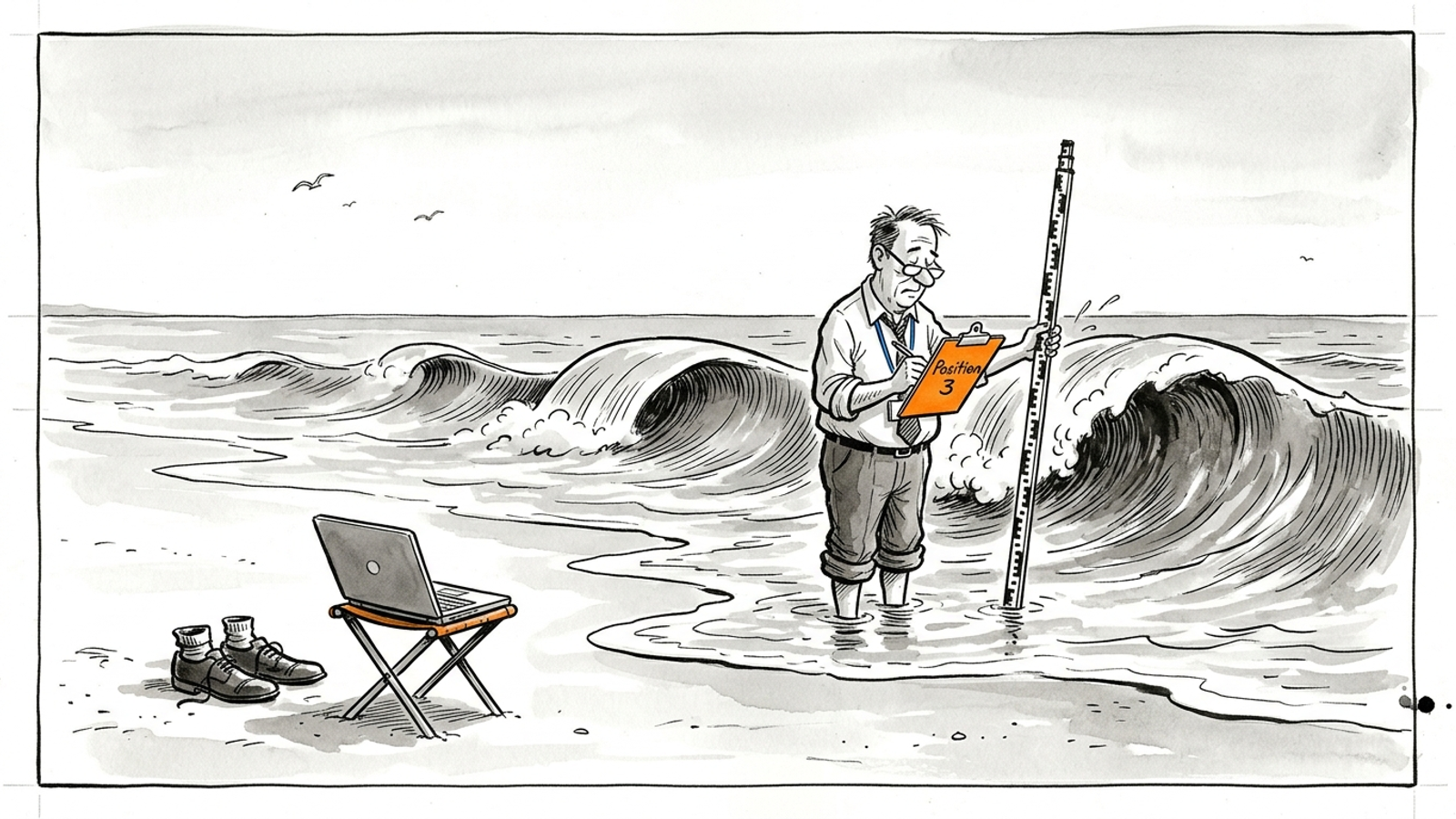
You can run your own Google Ads account and still get your AI visibility report wrong by lunchtime. The trouble is not that your PPC instincts are bad. It is that AI answers give you none of the familiar ledger: no clean impression count, no dependable position, no weekly search terms report and no conversion tag that settles the argument.
I understand the instinct to look for those things. In Ads, you can pull Monday’s report, check the search terms, pause what is bleeding money and adjust a target. When a small business starts monitoring ChatGPT, Google AI Overviews and Gemini, it is tempting to do the same: type a buyer question, find the brand in the third bullet, enter “Position 3” in a spreadsheet and call that a baseline.
That spreadsheet looks reassuring. It is also where the trouble starts.
“I’ll check on Monday, like I do with Ads”
A weekly Ads review gives you an aggregated account of real auctions. A weekly manual AI check gives you one answer to one prompt on one occasion. Repeat the question and the answer may change. Checking less often does not smooth out that variation; it just gives you fewer chances to see it.
That distinction has a practical cost. Your tool appears in a recommendation on Monday, so you tell the team its visibility is improving. On Friday, an executive asks the same question and finds nothing, so everyone wants to rewrite the homepage. Neither response, by itself, tells you whether the brand became more or less visible.
Keep the weekly review if it helps your team act. Just feed it repeated observations rather than a single screenshot. Review a trend; do not promote one answer into a trend.
“There must be an impression count somewhere”
Every self-taught PPC manager looks for the denominator. In Google Ads, impressions anchor click-through rate, lost impression share and a rough sense of demand. If an account reports 4,000 impressions and 120 clicks, you have something concrete to work with. Naturally, you go looking for the equivalent in Search Console, server analytics or an AI monitoring dashboard.

There is no clean AI-answer impression counter to pull. OpenAI does not report how many user prompts produced an answer citing your site. Google Search Console folds AI Overview data into standard organic search impressions, so you cannot isolate every instance in which someone read a synthesized card rather than a blue link. An “estimated AI impressions” figure may be assembled from keyword volumes, assumptions about when an AI answer appears and an estimated click-through curve. It is an estimate, not your missing ledger.
Build ROI around that figure and you give a guess the authority of an observed count. For an in-house baseline, measure something narrower and honest: citation frequency across a fixed panel of unbranded buyer questions. It will not tell you how many people saw an answer. It will tell you how often your brand appears when you run the same tests repeatedly.
“One check per prompt is a measurement”
In paid search, one impression is a real event in an auction you can measure alongside many others. An AI answer is also a real observation, but a single observation cannot establish how reliably the answer engine recommends you. That is the mistake behind the screenshot dropped into a slide deck with “We rank for this” underneath.
The variation is substantial. In SparkToro’s 2,961-run study, fewer than 1 in 100 runs returned an identical brand list, and fewer than 1 in 1,000 returned brands in the same order. Data published by AirOps found that only 30% of brands stayed visible from one prompt run to the next. BrightEdge also found that ChatGPT, Google AI Overviews and Google AI Mode disagreed on brand recommendations 61.9% of the time on identical queries.
The cost is false security. Your brand appears once, so you assume buyers asking that question will see it too. Instead, run each question multiple times across the engines you care about and record how often you appear. If you need a starting structure, our guide to building an AI visibility baseline across 40 prompts and multiple engines lays one out.
“My rank is my rank”
Ads gives you placement categories. Organic search gives you a results page where position 1 sits above position 4. It is tempting to read an AI answer the same way: four brands in a list, four ranks, and perhaps a small celebration if yours appears first.
An answer is not that tidy. The model may mention your product first as a setup before recommending a competitor. A brand can appear as an example, a neutral aside or a warning. In an analysis of 29,500 AI brand sightings, practitioners found roughly one-third were neutral mentions and several hundred were explicit warnings. A scraper that counts every name match as a win can turn bad news into a cheerful chart.
Nor should you assume an established organic position secures an AI citation. BrightEdge reported that overlap between Google’s organic top 10 and AI Overview citations fell from roughly 76% in mid-2024 to 17% in 2026; another estimate in the draft’s source put it at 38%. The estimates differ, but neither makes organic rank a substitute for checking the answer itself.
Read the recommendation, not just the order. Log whether the brand was recommended, merely mentioned or actively discouraged. First place in a list is worth little if the next sentence tells the buyer to choose someone else.
“There’s a learning phase, so I’ll wait two weeks”
Google Ads trains patience into operators. Change a tCPA target or launch a Performance Max campaign and a “Learning” badge tells you not to keep grabbing the wheel while bidding recalibrates. Bring that habit to AI visibility and you might update a pricing page, publish a comparison, then wait fourteen days for the model to learn what you changed.
That is the wrong mechanism. A page edit does not trigger a Google Ads-style learning phase in an answer engine. Retrieval can bring web documents into an answer; waiting, on its own, does not make a missing page more useful or more likely to be retrieved. If your comparison lacks clear facts, the calendar will not write them for you.
Research from Princeton presented at KDD 2024 found that adding authoritative statistics and inline citations each increased citation probability by 30%, while expert quotes increased it by 41%. That is a reason to examine the information on the page, not a promise that inserting a quote will earn you a mention next Tuesday.
After an edit, record what changed and keep testing. If the page still does not appear, investigate the content and whether engines can access it. Do not mistake two weeks of inaction for algorithmic discipline.
“If I can’t track a conversion, it isn’t worth doing”
In direct-response PPC, a campaign can spend $1,000 without a conversion and give you a clear reason to intervene. Apply the same pixel-or-nothing rule to AI search and the GA4 report looks grim: a handful of referrals from chatgpt.com or perplexity.ai, perhaps no neatly attributed sale. It is easy to call the whole channel a distraction.
But a buyer can read an AI recommendation, open a new tab and search for your brand. That visit will not necessarily carry the referral trail you want. Data compiled by Loamly found that 70.6% of visits originating from generative AI tools arrived with stripped referrers, leaving many to appear as Direct traffic in GA4. The same data reported a 20.7% goal-completion rate for AI search sessions that converted, versus 11.1% for standard direct visitors.
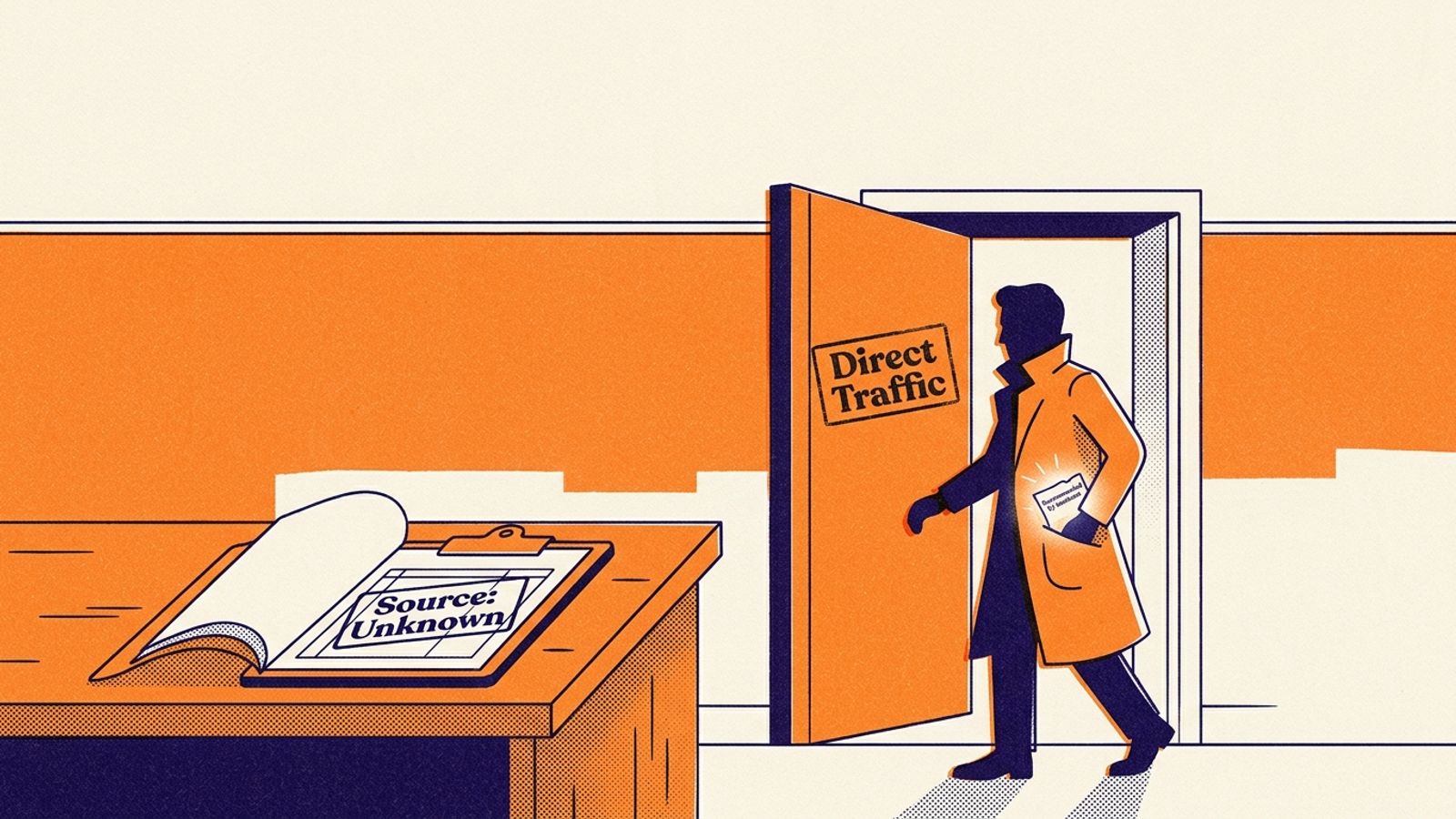
None of that lets you assign every Direct visit to an AI answer. It does mean a clean referral report cannot settle the channel’s value by itself. Compare changes in branded and direct traffic with your citation history, and ask buyers how they heard about you. Then check whether those signals show up in qualified pipeline. Otherwise, the cost of a spotless attribution rule may be abandoning buyers you could not tag.
“I need an expensive dashboard before I can start”
PPC operators are used to buying tools. Keyword trackers and competitive dashboards have their place, so a $400 monthly AI visibility seat can feel like the responsible first purchase. Configure twenty prompts, receive a Tuesday chart and call the monitoring problem solved.
You can start smaller. A lightweight script, a Google Sheet and two APIs can run a prompt panel without an enterprise subscription; our in-house AI brand monitor framework walks through that approach. The dashboard is not the deliverable. Its job is to show you where to investigate and whether a change helped. Here is the monitoring checklist I would use before paying for more reporting:
- Choose buyer prompts: Build a fixed panel of 30 to 50 unbranded problem questions; asking directly for your company mostly tests whether the model can describe it.
- Repeat the runs: Test ChatGPT, Gemini and Google AI Overviews three to five times per prompt rather than treating one response as persistent visibility.
- Classify the mention: Record recommendation, neutral mention or warning; a plain-text brand match is not automatically a win.
- Check server logs: Separate user-triggered
ChatGPT-Userfetches fromOAI-SearchBotindexing passes; robots.txt tokens such asGoogle-ExtendedandApplebot-Extendeddo not make HTTP requests. - Date each intervention: Log the URL and date of factual edits, pricing-table additions or schema changes beside the citation scores.
- Validate pipeline: Compare citation changes with direct traffic and “How did you hear about us?” responses; skip this and you can spend months improving a scraper score without finding qualified buyers.
“Once I can monitor it, I can fix it”
This is the most costly belief on the list. Detection is cheap compared with remediation. Finding that Gemini omits your pricing page takes minutes; improving comparison data, making documentation useful to crawlers, checking technical access and getting changes shipped across product pages takes people, time and ownership. A marketing lead running daily search campaigns may be able to maintain the tracker and still have no capacity to act on it.
That is the point where I would decide whether to track AI visibility in-house or pay for execution. Do not confuse paying for execution with paying for a longer list of tasks. A $3,000 monthly retainer that produces a 20-page audit of work your team must still do leaves the bottleneck where it was.
At groas, our model pairs specialized AI execution across search with a named human strategist who owns direction and accountability. That is the better fit when the team needs changes made continuously, not another Tuesday dashboard or an agency deck explaining why someone else should update the page. Keep monitoring in-house if it is useful; pay to remove the execution bottleneck, not to admire it.
“None of my PPC habits apply here”
I have spent this article taking familiar PPC habits apart, but I would keep the important ones: skepticism, controlled changes and a refusal to celebrate vanity metrics. You already know that a beautiful click-through rate can coexist with a worsening CPA. An AI citation can look equally good while qualified pipeline stays flat.
Change ten product pages at once without a baseline and you will struggle to tell which edit mattered. Track only brand mentions and you may miss that buyers never ask about you by name. The operator discipline carries over; the measurement unit does not. Hold changes against a fixed panel, keep the history and make pipeline the test of whether a visibility gain was worth pursuing.
“AI visibility will stay free”
This is the belief I am still not sure about. PPC operators have watched paid placements take up more room in search results over time. It would be a strange bet to assume commercial recommendations in AI answers will remain untouched by paid media indefinitely.
I still think it makes sense to improve pages for generative retrieval now. Buyers can find you through those answers, and the work of making product information clearer is work you can do today. But I would not build a plan around organic AI citations being a permanent moat. Capture the opportunity while it exists, connect it to qualified pipeline, and do not assume the answer engine will let you eat for free forever.