

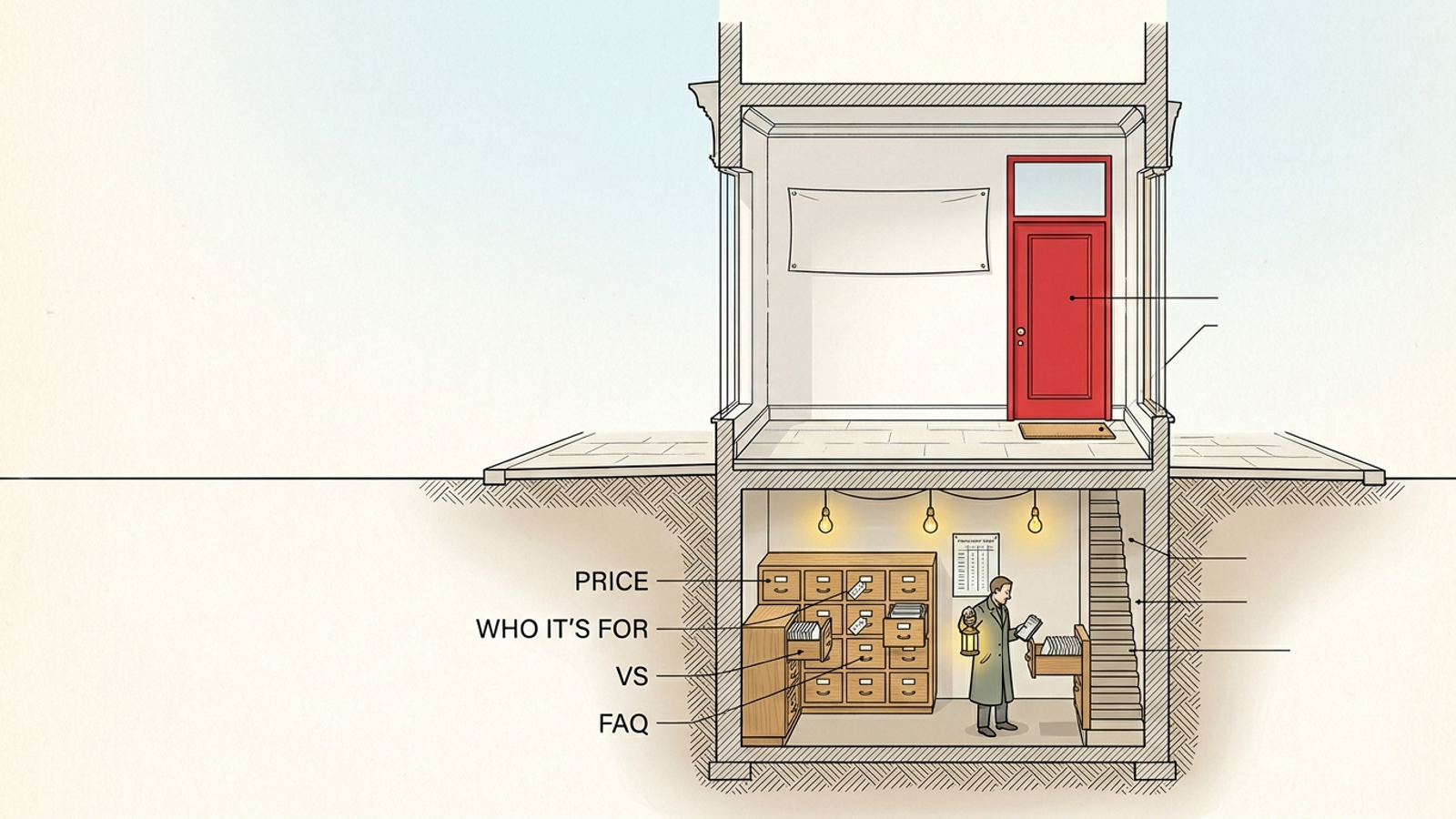
Your best paid-search landing page may give an answer engine almost nothing to cite. The mistake is trying to fix that by turning the hero that converts into an encyclopedia entry.
I understand why those pages are sparse. Paid search taught us to write a crisp headline, offer a few benefits, remove distractions, put one button above the fold and often hide pricing behind a demo form. That architecture gives a visitor a clear next move. But when an answer engine evaluates the same URL, it may find no price, no defined buyer, no implementation detail and no direct answer to the question that brought the buyer there.
The gap matters more as AI answers appear on commercial searches. Across more than 600,000 queries, Semrush found that AI Overviews grew 71% on commercial-intent searches between late 2025 and spring 2026. Seer Interactive’s tracking of 5.47 million queries also found a steep traffic gap between brands included in answers and those excluded. Rewriting a working paid lander to chase those citations is still the wrong first move.
Instead, add an extractable layer beneath the primary conversion path: factual answers, pricing boundaries, comparisons and proof that a machine can read and a buyer can use. Keep the hero that pays the bills. Give the rest of the page something worth quoting.
Why does a page built for paid search get skipped?
A paid click and an answer-engine retrieval are different jobs. When someone clicks an ad, you want a clear match between the query, the offer and the next action. A short page can do that well. If you sell warehouse inventory software, a headline such as “The Modern Warehouse Platform Built for Scale” may orient a buyer quickly. It does not tell an answer engine what team size the product supports, which systems it connects to or what it costs.
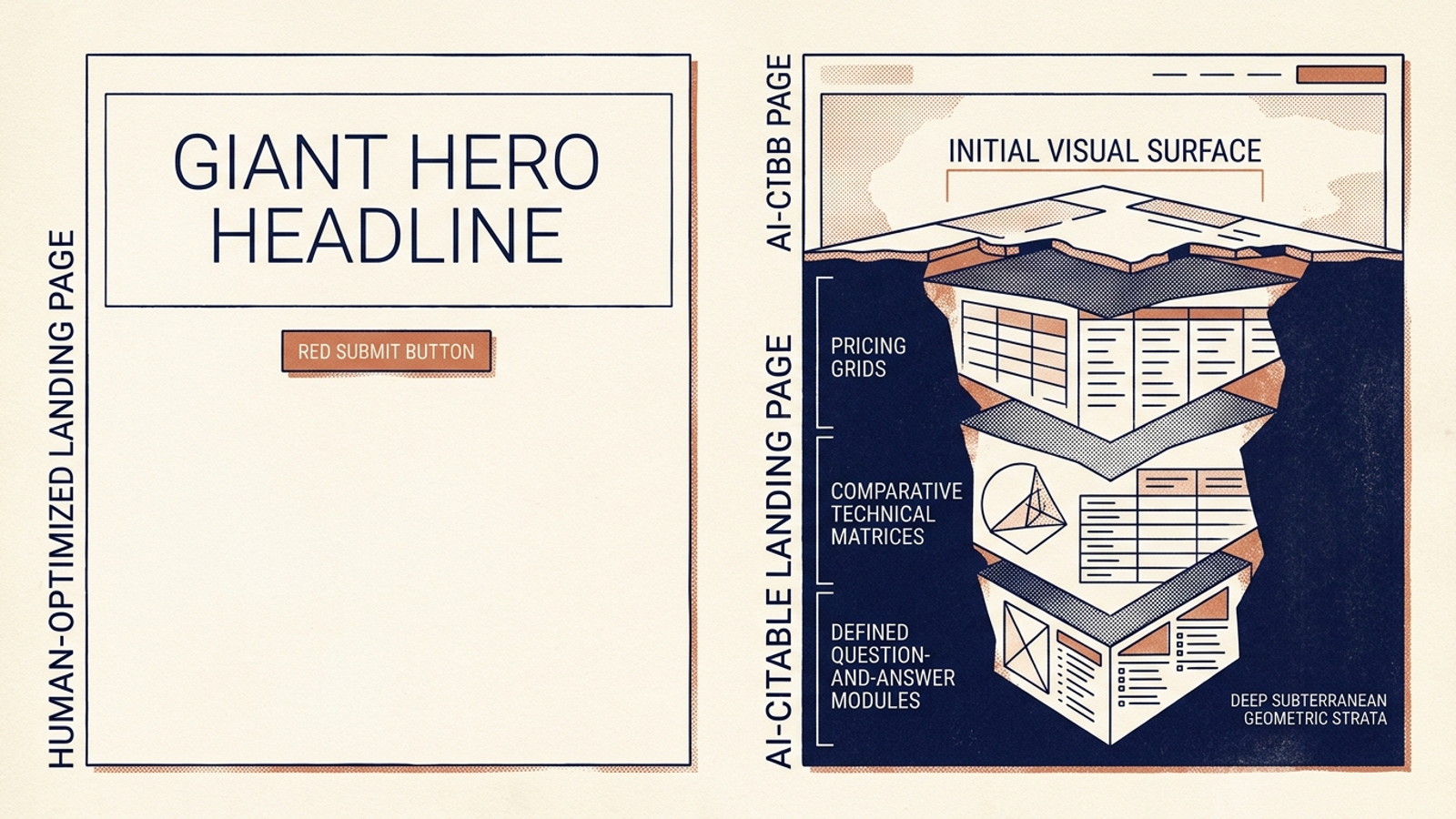
Answer engines assemble responses from explicit information. BrightEdge reports a 54.5% overlap between AI Overview citations and top-ten organic results for informational queries, but 22.9% for commercial queries. Ranking well does not guarantee that a commercial page supplies the passage an answer needs.
A page that says “flexible pricing” and “unmatched efficiency” leaves a buyer’s practical questions unanswered. An affiliate table or directory with numbers may become the easier source to cite. Practitioners have described seeing highly ranked pages bypassed in AI Overviews when the pages offered marketing claims instead of usable answers. The lesson is not to abandon persuasive copy. It is to put quotable facts where the page currently goes silent.
Step 1: Which buyer questions should this page answer?
Start with the asset PPC operators already have: the paid search terms report. I would use the last ninety days to find questions with buying constraints, then match each one to a fact the landing page can state honestly.
- Export the queries. Look for qualifiers such as “how much does [category] cost,” “[brand] vs [competitor],” “implementation time for [service]” and “best [product] for small teams.”
- Identify the constraint behind each query. Is the buyer asking about price, team size, integration, deployment or fit?
- Check the page for an explicit answer. If the answer exists only in a sales call, the page cannot supply it to an answer engine.
A buyer might ask, “What is the best inventory management software for a 50-person distributor running Shopify that costs under $500 a month?” Benefits copy alone cannot establish whether your product fits. The page needs to state the relevant price boundary, supported team size and integration capability, if those claims are true.
Skip the temptation to build an FAQ around every keyword variation. One accurate answer to a real buying constraint beats five promotional questions.
Step 2: Where does the extractable layer go?
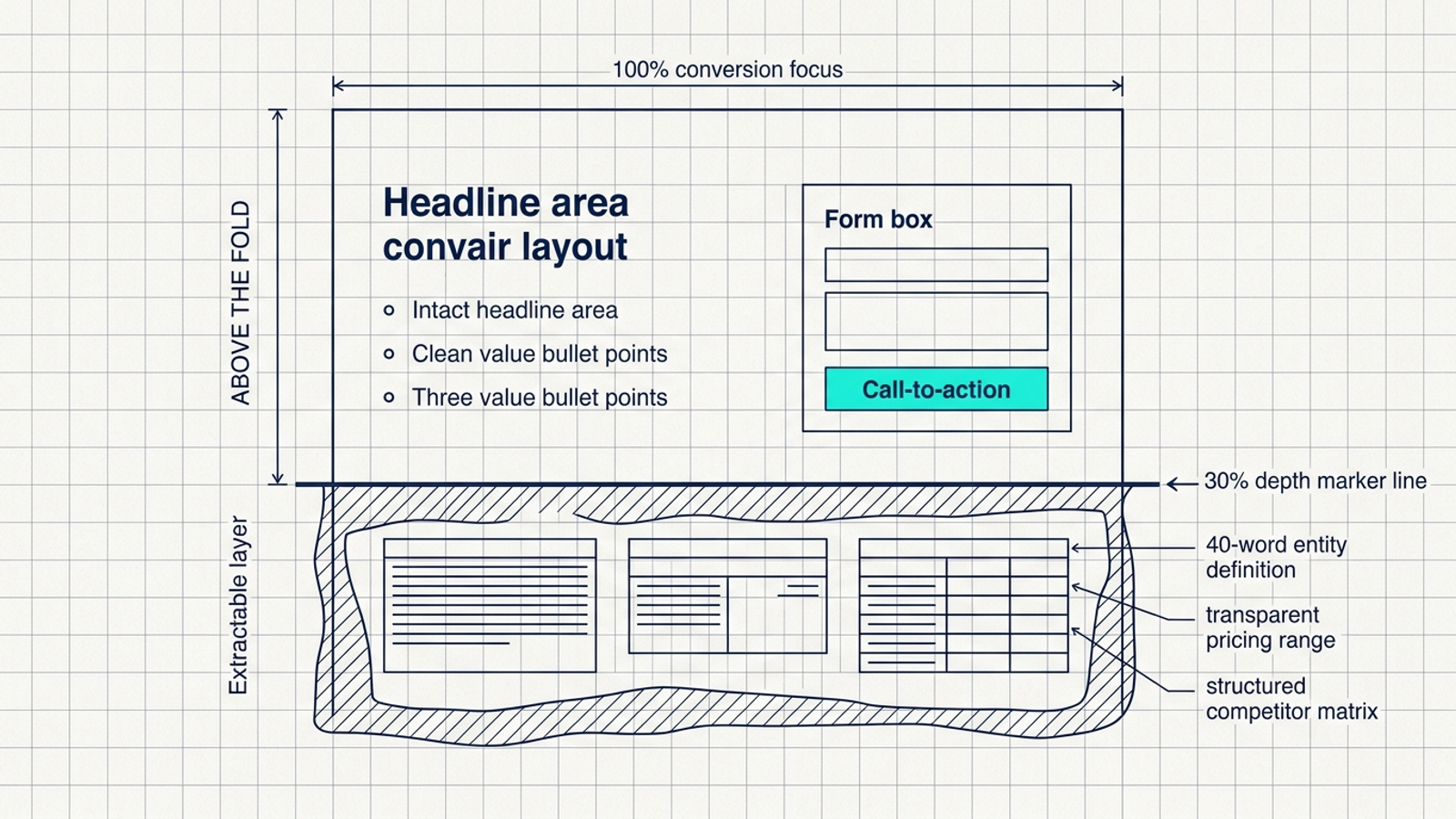
Protect the first screen on desktop and mobile. Keep the primary headline, proof, form and call to action in place while you add factual material beneath them. Put the most useful definitions early in that lower layer rather than burying them in the footer.
What is this, and who is it for?
Give the product a plain-language definition directly beneath the hero or its customer proof. State the category, intended buyer and functional boundaries in roughly 40 to 60 words. For example: “[Brand] is cloud inventory software designed for mid-market distributors with 10 to 500 team members, providing real-time barcoding, EDI compliance and native Shopify integration.” Publish that sentence only if each detail describes the actual product.
Placement matters. In a CXL audit of Google AI Overview citations, 55% of cited passages came from the first 30% of the document. Kevin Indig reported a similar top-of-page pattern across 18,012 ChatGPT citations. That does not mean pushing your form down. It means making the first section after your conversion elements do real explanatory work.
What does it cost, and who qualifies?
I know why marketers hide pricing: the demo form can preserve a conversation. But “customised pricing based on your unique needs” gives an answer engine nothing to use when a buyer asks what the category costs. A range or minimum can answer that question without pretending every account has the same price.
State the boundary your business can stand behind: perhaps a base plan starting at $499 per month, a deployment range of $12,000 to $18,000, or an account minimum. Those are examples of the kind of specificity to publish, not numbers to copy. If you cannot substantiate a number, do not invent one for a citation. The point is to let suitable prospects recognise a fit before they reach the form.
How do you compare with the alternatives?
When a buyer asks an answer engine to compare two products, a page that refuses to describe the difference contributes little. Add a short passage or clean comparison grid beneath the core features. Compare scope, intended customer and implementation approach using facts you can support.
Do not turn the grid into an excuse to send your intended buyer elsewhere. If your product is built for high-volume enterprise operations with dedicated engineering support, say so. If an alternative focuses on instant self-serve setup for solo founders, that distinction helps an enterprise buyer understand why your product fits their job. A useful comparison makes the choice clearer without pretending every buyer has the same needs.
Which FAQ answers are worth writing?
Skip “Why should I choose [Brand]?” It invites three paragraphs of praise when the buyer wants a number or a process. Use questions drawn from the search terms report instead: “How long does onboarding take?” or “Which Shopify setup does this support?”
Guidance from AEOmotor on FAQ citations favours concise passages of roughly 40 to 80 words that begin with a factual answer. If your verified average is 14 business days, lead with “Onboarding takes an average of 14 business days.” Then explain the steps and any conditions that change the timeline. Answer first; explain second. A buyer can scan it, and an answer engine has a complete passage to extract.

Step 3: Can a crawler read those facts?
Good copy is not enough if the facts arrive only after a script runs or a visitor clicks a tab. Start with naming. If your H1 calls the product an “all-in-one operations hub,” the body calls it a “warehouse inventory tracker” and the footer calls it “supply chain ERP middleware,” you make a simple question harder than it needs to be: what is this product?
Pick an accurate primary category and use it consistently across headings, body copy and metadata. You can still explain the other functions. Give readers and retrieval systems one stable answer to what you sell.
Does the structured data match what visitors see?
Structured data can make the page’s relationships clearer. A SearchAtlas investigation into schema for answer engines reported higher citation rates for pages using several complementary, synchronised schema types than for pages using just one. Depending on the page, relevant types may include Service or Product alongside Organization and FAQPage.
Do not treat JSON-LD as a place to stash claims the page will not show. If the structured data lists a price or onboarding timeline, the visible page should support the same claim. It need not repeat every sentence word for word; it must not tell a different story. Schema helps describe the content. It cannot replace it.
Is the answer in the initial HTML?
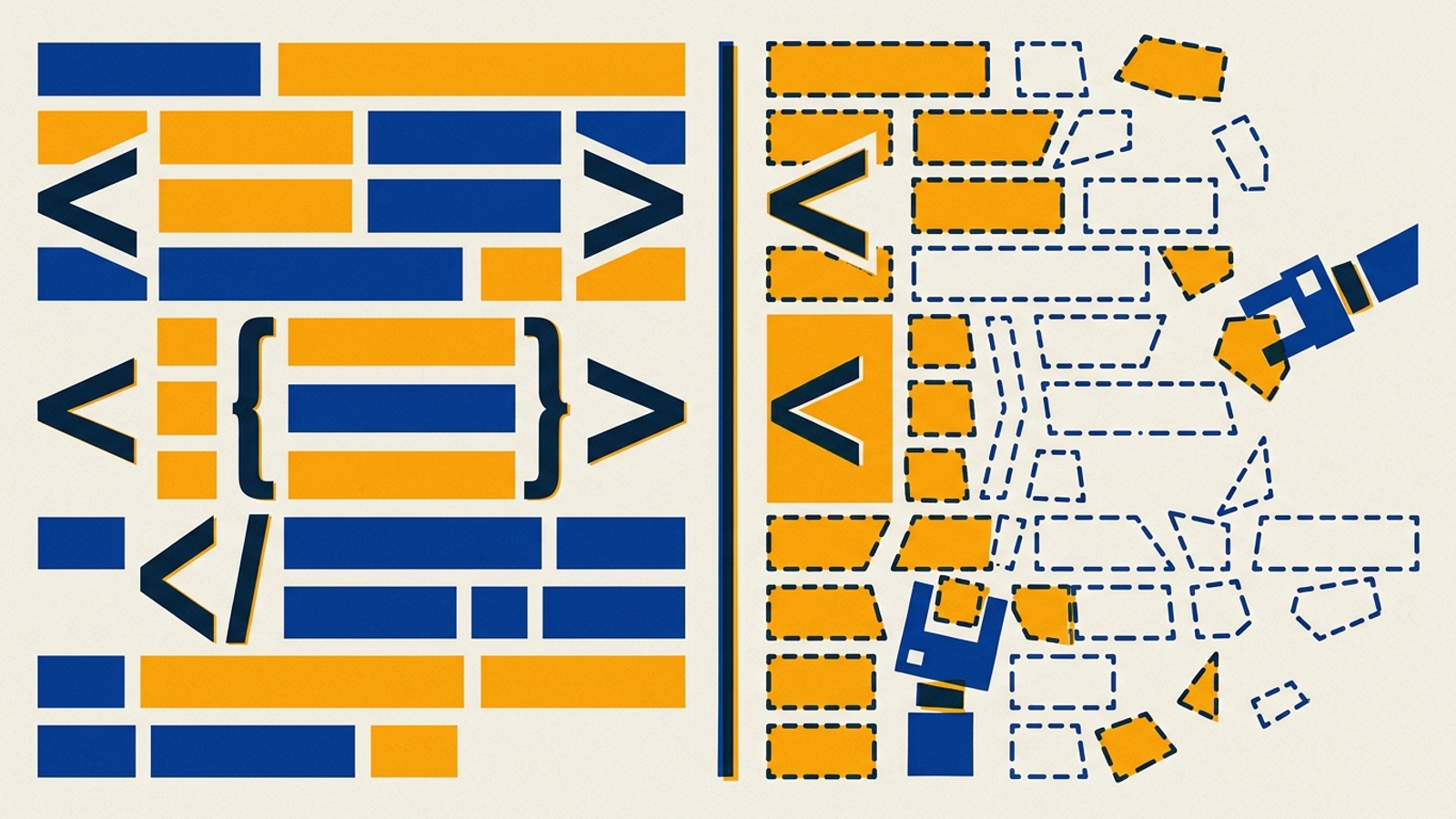
This is where a polished landing page can become an empty shell to some crawlers. Client-side JavaScript can put pricing, comparison or FAQ text on screen for a visitor without placing it in the initial HTML response. An investigation of crawler fetches by Passionfruit SEO reported no JavaScript execution across GPTBot, ClaudeBot and PerplexityBot in the fetches it examined. Googlebot can render JavaScript, but relying on rendering adds another dependency.
Open the raw page source, not just the browser’s rendered view. Search for a distinctive sentence from your answer block and for your pricing range. If neither appears in the initial HTML, make that content available without requiring client-side execution or a click. Write the answer, then verify that a crawler can actually receive it.
Step 4: What makes those claims trustworthy?
“Leading provider” and “unrivalled results” tell a buyer almost nothing. A measurable claim tells them what to check. If you can verify it, “average onboarding time of 14 days based on 412 client deployments in 2025” is more useful than “rapid implementation.” A specific security certification and audit schedule is more useful than “enterprise security.” Do not publish those examples as your own credentials unless they are true.
Keep the details consistent wherever you control them: the landing page, documentation, official listings and directory profiles. A buyer should not see one price boundary on your page and another in your documentation. The same discipline helps an answer engine identify which claim to use. Proof needs a number, a method or a clear boundary, not another adjective.
What should you leave alone?
The most expensive response to poor AI visibility is over-correction. I have seen the pattern: a working paid lander becomes a long essay, grows a navigation menu and sprouts links above the form. The team gains information and loses the clean path that made the page useful to paid traffic.
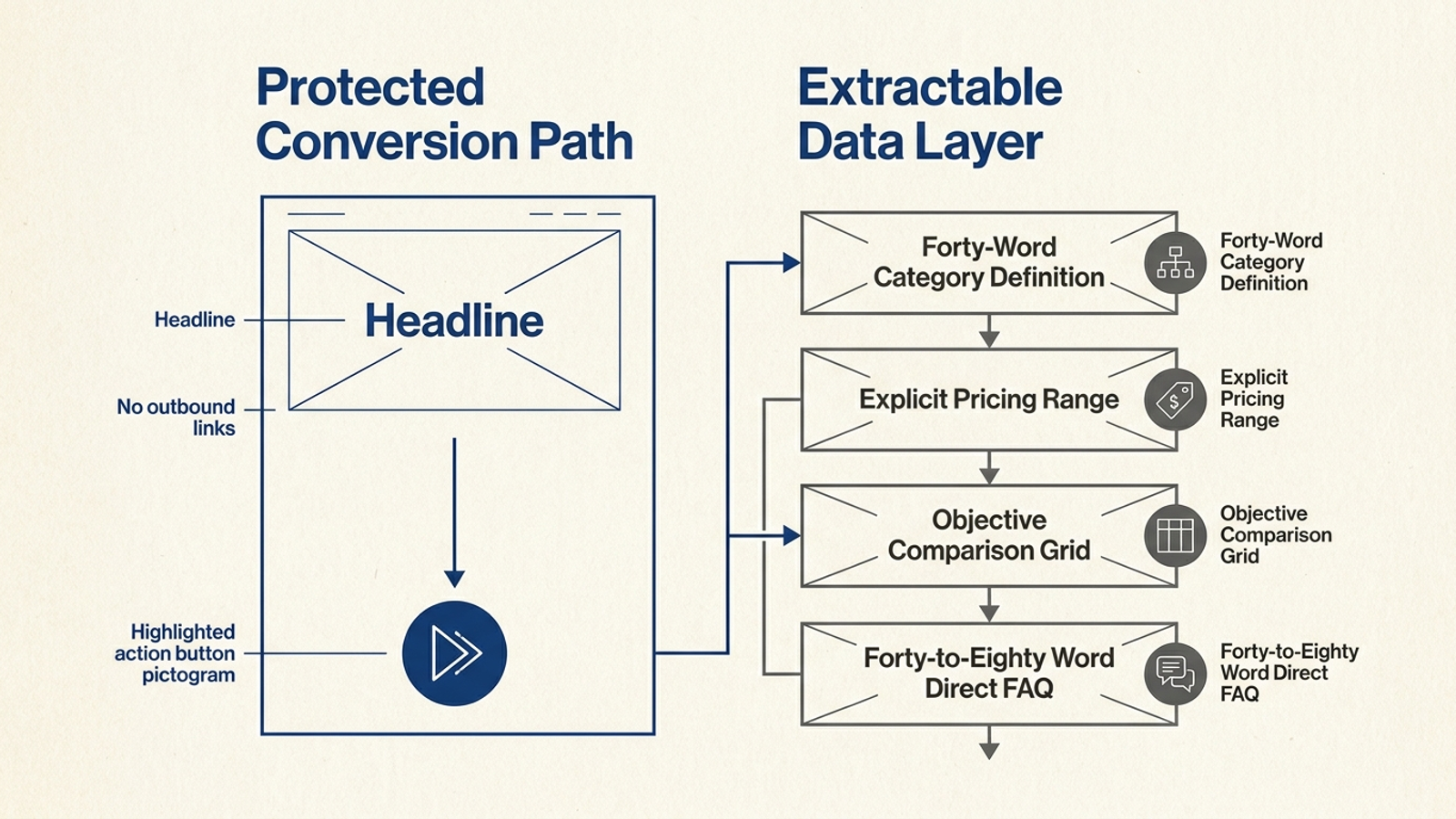
Protect these elements while you build the lower layer:
- The hero: Keep the primary value proposition, imagery and top form fields in their working positions on desktop and mobile.
- The main call to action: Do not crowd it with a whitepaper download or other informational CTA above the fold.
- The form: Do not add fields just because the page now explains price and fit. Let that copy help visitors qualify themselves.
- The route through the page: Put definitions, comparisons and FAQs in discrete sections beneath the primary conversion elements, not between the visitor and the button.
This is an addition, not a redesign. Skip the hero rewrite unless you have a separate conversion reason to make it.
Do you need software that grades the page or changes it?
Tools can show you missing answers. That is not the same as publishing them. An Omniscient Digital analysis of generative engine optimisation tools describes platforms priced from $80 to $700+ per month that grade pages, flag citation changes and export recommendations. If the work still requires someone to draft the copy, write the schema and queue a developer sprint, you have bought another dashboard.
First, check the page against the AI Overview landing-page pre-flight checklist. Then ask who will make and verify the changes. That execution gap is why we built groas earned search: purpose-built models audit tracked buyer queries, generate factual data layers, deploy structured schema and work through crawl bottlenecks, while a named human strategist owns direction and accountability. The useful distinction is monitoring versus execution.
How will you tell whether the layer worked?
Do not expect an immediate flood of referral sessions in Google Analytics 4. An answer engine can answer a question without sending every reader to a source. For the first six weeks, check the commercial prompts you targeted once a week in Google AI Overviews, Perplexity and ChatGPT.
Track two things:
- Does your brand URL appear among the citations?
- Does the answer use the numbers, pricing boundaries or fit statements you published?
Keep watching the paid landing page’s conversion rate as well. A citation is not a win if the change damages the path that already produces customers. If citations begin to appear while paid conversion holds, the new layer is doing the job you gave it.
Today, pick your highest-spend paid search landing page and open its raw source. Look for a plain-language product definition, an operational fit statement and a pricing boundary in the HTML. If they are missing, draft three factual sentences beneath the existing customer proof, verify every claim and publish them where a crawler can read them. Leave the hero alone.