

AI visibility dashboards are pulling the old Google Ads grader trick: hand you a scary score, charge you to watch it change, and leave your site untouched. I spent years receiving the emails that trick produced. A client would run an account through a free audit tool, get a bright red 34 out of 100, and forward the PDF with three question marks in the subject line.
The grader would claim they were wasting 42% of their spend because they had not enabled broad match across every ad group or lacked sitelinks on an exact-match campaign that had printed money for three straight quarters. It did not know their gross margin, close rates, or whether that campaign paid their mortgage. It had a score to sell.
Now the same pitch wears an AI badge. Connect your domain to a tracker and a dark-mode dashboard announces an AI Visibility Score of 23 out of 100 across ChatGPT, Gemini, and Google AI Overviews. Your competitive position glows amber. A chart shows your supposed share of voice slipping. For $400 a month, you can keep watching it slip.
The business model is older than the interface. As this teardown of the WordStream Google Ads Performance Grader describes, letter grades and wasted-spend figures made an effective route from free audit to paid management tools. The AI version sells the alarm, bills for the monitoring, and leaves the repair to someone else.
I have seen this movie: a score replaces the business
A scorecard compresses a messy commercial reality into one neat number. In paid search, operators know why grader scores do not fix campaigns. An account can display a 99.1% Google Optimization Score while spending 18.7% of its budget on non-converting terms. The score reflects the settings the grader rewards. It does not tell you whether you acquired paying customers.
That distinction is the whole grievance. A score can identify something worth investigating; it cannot do the investigation or the repair. Treat it as a verdict and the vendor gets to decide what success looks like before anyone asks what the business needs.
The new pitch: “Your AI visibility is 23 out of 100”
The demo has a familiar choreography. A founder or VP of marketing shares their screen. A rep pastes the company domain into a proprietary scoring engine. Three seconds of rotating CSS spinner later, the verdict appears: 23 out of 100. Under it, a bar chart shows a competitor cruising at 68. The rep leans in. Buyers are asking ChatGPT, Claude, and Perplexity for vendor recommendations, and your brand is practically invisible. You need prompt-level intelligence. You need conversational monitoring.
What the screen does not explain is the denominator. As Search Engine Land notes in its discussion of AI share of voice, traditional search can draw on keyword baskets with measurable search volumes; generative prompt spaces do not offer the same fixed total. A platform selects a set of prompts, queries a model, averages the mentions, and presents the result as a market-share-style number. That number may tell you what happened in its chosen sample. It cannot tell you your share of every question buyers ask.

Then ask what counts as a win. As LLM Pulse’s review of AI share-of-voice methods shows, platforms can count different things: an unlinked brand mention, a clickable citation, or a weighted appearance in a list. Change the rule and the score changes with it. You can pay between $99 and $399 a month for a number without first noticing what the number includes.
Some platforms also show estimated monthly prompt volume. Treat that label carefully. Practitioners discussing those estimates point out that the tools do not have direct access to OpenAI’s or Perplexity’s internal query logs. An estimate is not a count of the conversations your buyers actually had. Before you react to the chart, ask what the tool measured.
Share of voice measured weekly, changed never
What does the monthly fee buy? Often, a weekly notification. A scheduled process sends prompts, records responses, refreshes a line graph, and emails your marketing lead a tidy PDF. Your score drops from 23 to 21; the dashboard turns red. A competitor disappears from one answer; your score rises to 26 and the chart calls it growth.
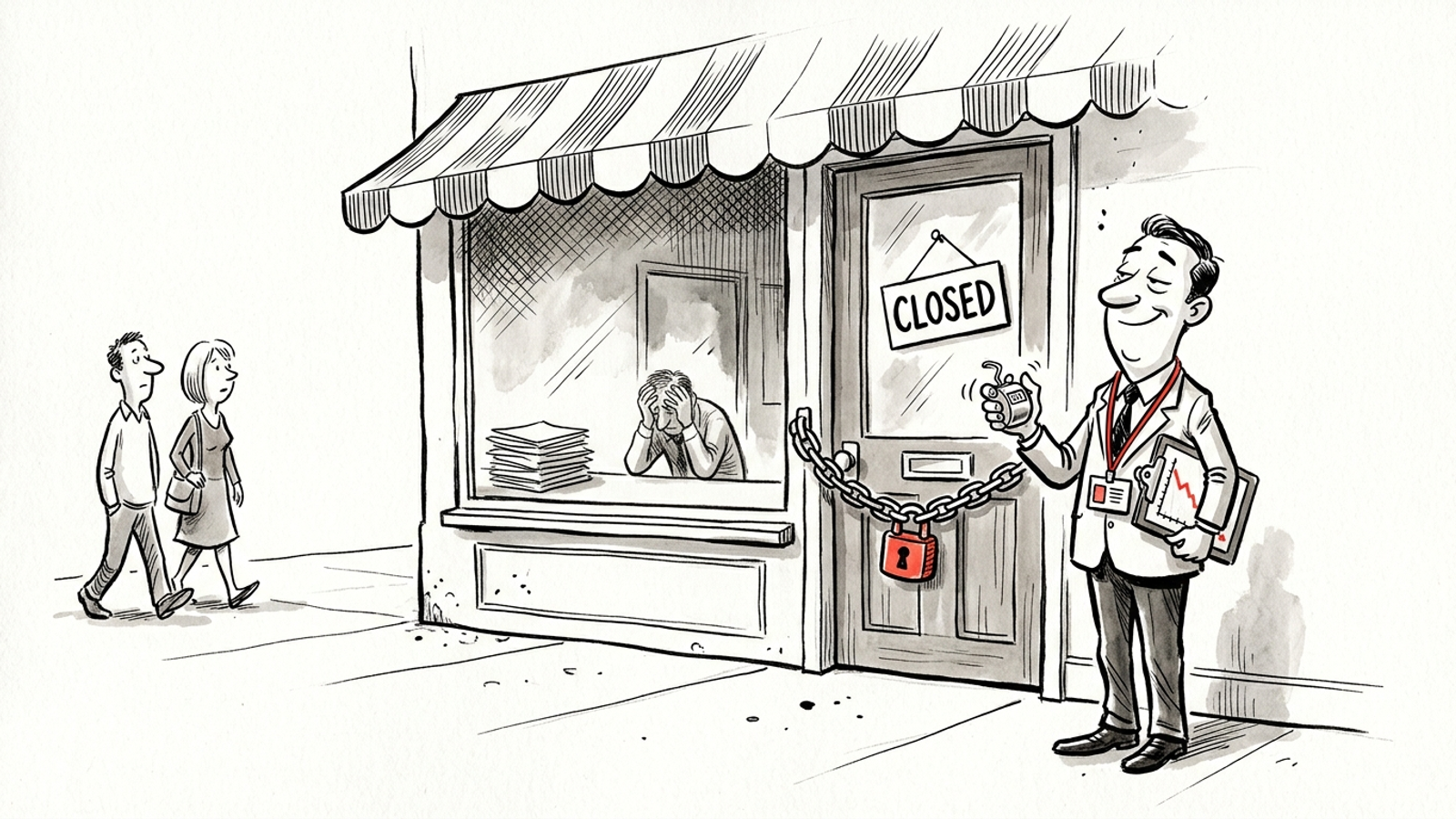
Meanwhile, nothing on your site changed. Nobody corrected an ambiguous description on your services page, improved a pricing table, or published the comparison page a buyer might actually need. Nobody checked whether an answer engine could extract the right facts from the material you already have. You are paying someone to stand outside your store with a clicker, counting people who pass the window. The door is still locked.
What the deck calls “insights,” I call a paid to-do list
Click past the main gauge and open the recommendations tab. The platform tells you a competitor appeared in twenty prompts about enterprise payroll software while your domain appeared in two. Its recommendation: create comprehensive content about enterprise payroll compliance.
Thanks. That will be $500 this month.
As practitioners discussing AI visibility tools have observed, monitoring can leave the actual changes with the customer. The report may be useful. It is still a report. Another run-down of AI brand visibility tools describes enterprise prompt-tracking prices in the $400-to-$600-a-month range. Add that bill to a content manager’s existing backlog and an engineer’s list of production priorities, and the supposed optimization platform has created one more meeting.
Tracking a visibility deficit does not produce content. It does not add structured data to your templates, resolve conflicting product descriptions, or test whether a pricing page yields a usable snippet. The recommendations are only valuable if somebody can act on them. A reminder every thirty days does not become execution because it arrived in a polished PDF.

Why vendors love selling the thermometer
Monitoring is easier to sell than fixing the site
I understand the appeal of monitoring software. It can query a model on a schedule, record the response, and put the result on a chart without touching the customer’s site. This comparison of AI visibility trackers describes the underlying query-and-record workflow. It is a much narrower job than changing pages and checking the outcome. It is also easier to package as a subscription.
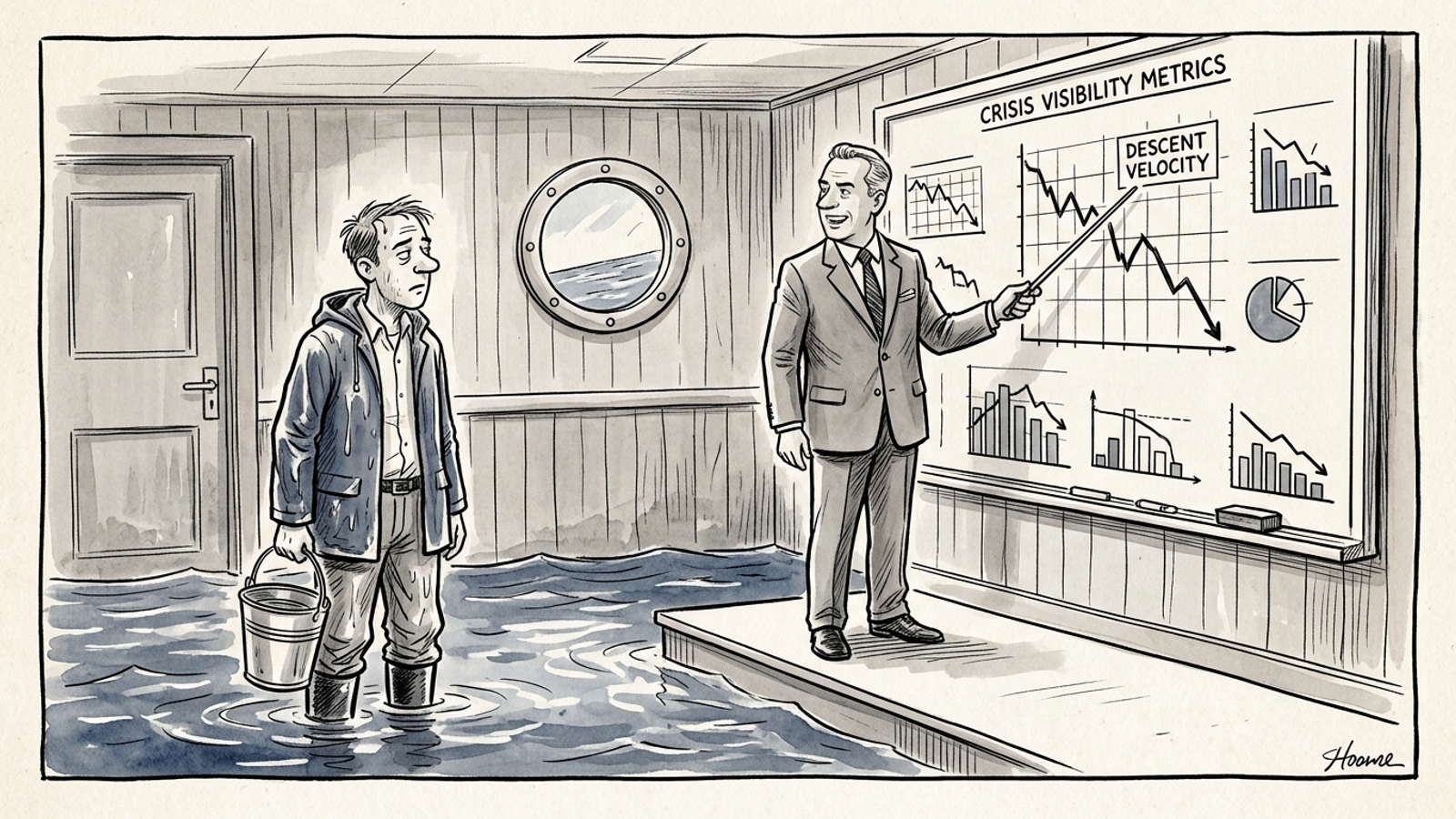
The thermometer is useful if you need a reading. But when the patient stays sick, the thermometer maker can point to the chart and say it worked as advertised. That is exactly the problem with buying one as though it were treatment.
The fix is work, not a prettier reading
To make a site easier for an answer engine to understand and cite, somebody has to inspect what is there. Are the product descriptions consistent? Can a reader find an unambiguous answer on the relevant page? Does the structured data describe the same thing the page says? Are the pricing and comparison pages clear enough to be useful outside a sales call?
Then somebody has to make the changes, publish them, and check what happened. That can mean editing documentation, improving entity definitions, deploying WebSite, Organization, or Product Schema where appropriate, and checking whether crawlers can access the facts. None of that fits inside a weekly line graph.
Business owners weighing these subscriptions should calculate what AI search visibility actually costs. A $500 tracking seat is not the whole bill if your developers still have to implement the recommendations and your content team still has to write the pages. Price the work as well as the watcher.
The tell: count the actions, not the charts
There is a simple way to separate an observation tool from an operating engine: count the write actions, not just the read actions. What did the product change? What was published, corrected, tested, or updated? If it reads responses from an API, turns them into a bar chart, and stops there, you bought reporting. You may want reporting. Just do not mistake it for the person or system responsible for the fix.
When I managed Google Ads campaigns by hand, I saw the same mismatch. A polished audit could list problems while negative keywords went untouched, conversion data stayed disconnected, and ad creative sat through another round of meetings. The account did not need a more handsome record of its decline.
Execution lives on the other side of that ledger. In paid search and organic visibility, groas combines autonomous work on campaigns and content with a human strategist who sets direction, guardrails, and accountability. Its models handle ongoing bidding, targeting, budget, and optimization work rather than asking your team to turn a dashboard’s suggestions into a project plan. That is the better alternative to paying a tracker to describe a gap and leaving your staff to close it.
The distinction is not whether the interface looks intelligent. It is whether the work gets done.
Three questions before you pay for an AI visibility tool
If you are on a sales demo or renewing a tracking contract, ask three questions before anyone opens another dark-mode chart. Do not accept a feature roadmap as an answer to what the product does today.
-
What did it change on my site last month? Did it publish an update, correct a definition, add appropriate structured data, or create an asset your team approved? If the answer is “we provide insights for your engineering team to deploy,” you are buying a backlog. That may be a deliberate choice, but it is not autonomous execution.
-
Which answer moved, and what changed beforehand? Ask to see the relevant prompt, the cited page, and the work done on that page. A four-point rise on a chart alone cannot establish that the tool caused it. Answers can change without any action from you. Do not pay for a causal story built solely from two screenshots.
-
If I cancel, what stays fixed? A monitoring subscription may leave you with a record of what it observed. Site improvements, by contrast, remain on your domain: clearer pages, corrected descriptions, useful assets, and structured data your team can maintain. This question tells you what you bought besides access to a login screen.
When founders ask me which tools help a business get featured in Google AI Overviews rather than merely monitored, I tell them to stop buying software that only watches. I do not object to measurement. I object to selling measurement as the work itself.
We learned this lesson with Google Ads graders. A red score did not add a negative keyword or improve an ad. The AI badge does not change the arithmetic: a thermometer has never cured a fever, and a weekly line chart has never earned a citation. If the software is not doing the work, you are.