

 LinkedIn
You can stop managing Google Ads every day without surrendering control of your revenue. But if you hand over the account before deciding what a valuable conversion is, you have not delegated management. You have delegated spending.
I spent nearly a decade managing search accounts by hand, from late-night query reviews to spreadsheet-by-spreadsheet bid changes. Much of that mechanical work can now run without an owner watching the dashboard. Bids, keywords, copy, and budget pacing are not where a busy owner needs to spend Tuesday morning.
Four decisions still determine whether hands-off management makes money or burns it: the conversion definition, the target number, the offer and landing page, and what the weekly report must prove. Skip those, and you are not hands-off. You are absent.
What can I safely hand over?
Ask an agency what can run unattended and you may still get a list of bid rules, scripts, and alerts. That leaves a lot of routine labor dressed up as account management. Today, what genuinely runs unattended extends across much of the daily mechanical work.
An autonomous execution engine can handle:
- Auction-time bidding: Evaluating device, query context, location, and other available signals at a pace no person with a spreadsheet can match.
- Budget pacing: Adjusting spend across campaigns so a strong performer gets room without letting the account blow through its cap.
- Search-query triage: Finding wasteful terms, excluding irrelevant queries, and catching geographic leakage without waiting for Friday’s cleanup.
- Ad-asset testing: Assembling and evaluating headline and description combinations, then moving away from weak assets.
This is the case for an autonomous paid ads management tool: machines do not get tired or forget an ad group after a holiday weekend. In groas’s model, flat pricing also means the management fee does not rise just because media spend does. But speed cuts both ways. Give an engine a bad definition of success, and it can pursue that definition all day.
Decision 1: What counts as a conversion?
The quickest way to waste money under autonomous management is to call every form fill a win. A conversion tag fires whether the submission came from a qualified buyer or someone offering guest-post exchanges. As practitioners dealing with lead spam describe, bidding toward easy-to-trigger forms can draw spend toward the wrong traffic. A qualified buyer might take two visits and forty-eight hours to book a call. A junk submission might take seconds. If both look identical to the bidding system, the system cannot favor the better business outcome.

Define the primary conversion around a business outcome, not the easiest event to count. For a lead-generation business, that means connecting ad activity to what happens in the CRM: a verified lead, a booked discovery call, a sales-qualified opportunity, or closed-won revenue. Offline conversion imports and Enhanced Conversions for Leads can help pass downstream outcomes back to the ad platform. The integration takes work, but it tells the bidding system which leads were worth pursuing.
When a professional services team improves lead quality without increasing budget, a new headline is not always the decisive move. Sometimes the important change is refusing to count junk as success. Before you automate more activity, make sure your primary conversion represents something your business actually wants more of.
Decision 2: What number can I afford to hit?
Autonomous bidding needs a constraint. A target cost per acquisition is not a wish list: entering $35 because you would prefer it to a historical $110 does not make $35 acquisitions available. An abrupt, unrealistic target can choke off bidding and leave the campaign with less data to learn from.
The machine does not know your gross margin, refund rate, or sales team’s closing percentage unless you translate those economics into a useful goal. Write down the target before you launch, and base it on what a customer is worth to the business. Pick the governing metric that fits the outcome you defined in Decision 1:
- Cost per qualified lead or acquisition: For lead-generation and service businesses, work backward from close rate and margin rather than treating every form submission as equal.
- Target return on ad spend: For ecommerce with varying order values, set a target that accounts for product costs and fees without strangling volume.
- Pipeline value: For B2B accounts sending opportunity stages back through a CRM, distinguish higher-value opportunities from lower-value signups.
Smart Bidding responds to the targets and conversion history it receives. Abrupt target changes can disrupt that process, so do not treat a target field as a place to type your most optimistic number. At groas, the target is set in writing before execution begins. The engine can work continuously toward it; the owner still has to decide what profitable growth means.
Decision 3: Would I buy from this offer and page?
No algorithm can make a confusing offer attractive. It can find people who appear likely to click, then send them to your URL. It cannot make your price make sense, explain a missing value proposition, or persuade someone to complete a twelve-field form before they have seen the basics.
The owner controls the promise made before the click and the experience after it. If you change either one, the account may be buying traffic for an offer that no longer matches the ad. I have seen the familiar version: a business redesigns its site, replaces a focused landing page with a generic homepage, and then wonders why lead costs move the wrong way. The campaign did not suddenly forget how to bid. The destination changed.
What if I need to redesign the landing page?
Do not treat an active ad destination as a casual cosmetic project. Check that the new page preserves the offer, pricing clarity, and conversion path the ads promise. If you want to test a substantial overhaul, use a dedicated URL variant and compare its results with the existing page before replacing it. Landing-page experience can affect ad performance; an account that looked stable yesterday may not be stable after a page swap.

Autonomous software can flag a page that stops loading or a conversion rate that slides. It cannot decide whether your new positioning is honest or your signup demands too much too soon. Own the offer. Let the system optimize the traffic around it.
Decision 4: What must the weekly report prove?
The traditional monthly agency deck can give you twenty attractive pages without answering one question: did the ads produce valuable business? Impression curves and click-through rates have their uses, but top-of-funnel reporting that avoids pipeline impact is not enough to judge hands-off management.
Ask for outcomes and an account of the actions taken to pursue them. Google Ads Change History can show that a setting changed. That is not the same as explaining why it changed. A useful operational change log connects an action to its trigger and the result it was meant to improve. If the system excludes a query, you should be able to see which query it excluded and why. If it moves budget, you should know what performance difference justified the move.
What should fit on one page?
I would ask for a weekly scorecard with four lines:
- Spend against the guardrail: What went out, and how does it compare with the budget cap?
- Verified downstream conversions: Which CRM-matched qualified leads, booked jobs, or revenue events came from paid search, kept separate from unverified forms?
- Effective acquisition cost: What did each qualified outcome cost compared with the target you set?
- Actions and reasons: Which queries were excluded, assets changed, or budgets shifted, and what prompted each decision?
At groas, execution decisions are logged and reported under client guardrails, with a dedicated human strategist responsible for direction and accountability. If a manager or tool cannot explain why it touched the account, you are being asked to trust activity rather than evaluate management.
What can I stop doing once those decisions are set?
Once the conversion, target, offer, and reporting standard are clear, stop treating the dashboard as a morning attendance sheet. A setup runbook for ads that manage themselves is useful because it separates decisions you make once from repetitive work the system should keep doing.
You do not need to personally review every query, write every ad-copy variation in a spreadsheet, or move budget because one ad group had a slow Tuesday. You also do not need to pay for those rituals merely because they take time. Let continuous execution handle the calculations and routine adjustments.
Do not stop owning the business inputs. If your margins change, your sales team changes its qualification standard, or the offer on the page changes, revisit the guardrails. Hands-off describes the operating workload, not the level of attention owed to your money.
How will I know if autopilot is going wrong?
A weekly scorecard should make drift visible. These four signs deserve a closer look rather than a reassuring slide about clicks:
- No meaningful logged activity: If weeks pass without relevant query exclusions, asset changes, or another clear explanation, ask whether the account is managed or merely running.
- Clicks from places you do not serve: Review location reports and the campaign’s location settings. Cheap traffic is not useful if the buyer cannot become a customer.
- Too little conversion data for the target: If a campaign produces fewer than thirty conversions a month, be wary of asking automated bidding to make fine distinctions from a thin signal. It may need closer human guidance while volume builds.
- Conversions rising while revenue stays flat: If the ad platform celebrates a 40% jump but the CRM does not show a corresponding improvement, inspect which actions counted as conversions before celebrating with it.
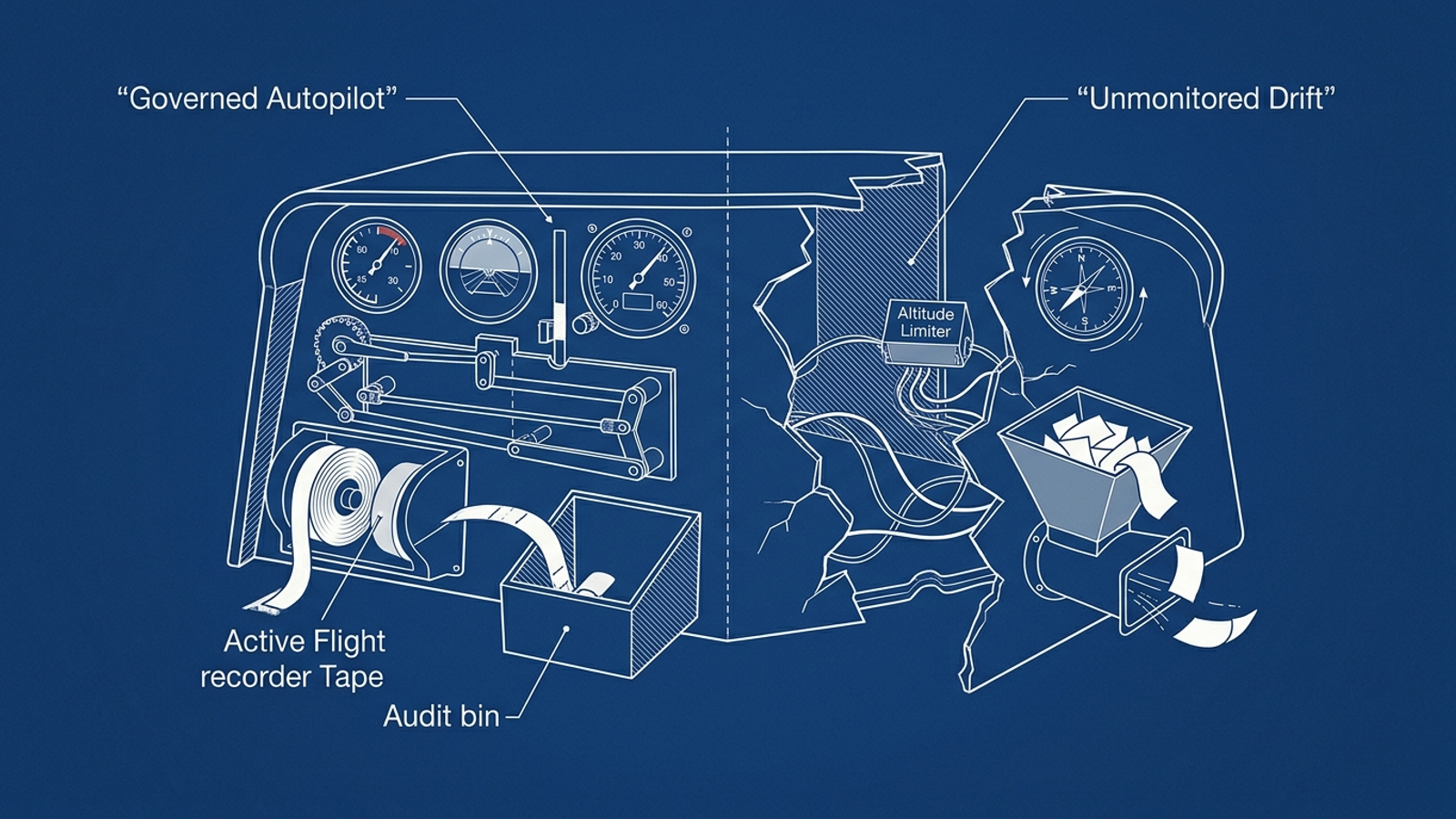
None of these requires you to become a full-time account manager. They require you to notice when the system’s story and the business’s story part ways.
What should I check each month?
I would put a recurring fifteen-minute review on the calendar. The weekly report tells you what the system says happened; this check compares it with records outside the ad account.
- Reconcile spend: Compare platform spend and the management fee with the budget you approved. Question an overage or an unfamiliar charge.
- Reconcile outcomes: Compare reported qualified leads or revenue events with the sales activity in your CRM. If the report says forty qualified leads and the team received twenty-two, investigate the gap.
- Read the action log: Look for meaningful interventions and the reasons behind them. If a month passed without a logged optimization, ask your strategist why.
That is oversight, not a return to 1am keyword mining. The point of the review is to catch a broken assumption before it becomes an expensive quarter.
Who should skip hands-off management for now?
Autonomy is a poor substitute for missing business information. I would hold off on a fully hands-off setup in three situations:
- You have very few conversions: At four sales a month, there may be too little signal for automated bidding to learn reliably. Keep a human close to early testing rather than pretending the data is richer than it is.
- You cannot state your unit economics: If you do not know what you can afford to pay for a customer, no tool can set a sensible acquisition ceiling for you.
- Your offer keeps changing: Weekly price changes, frequent positioning rewrites, or repeated landing-page replacements make it hard to tell whether the ads improved or the destination moved.
That is not an argument for returning to manual bid changes forever. Establish the economics and a stable offer first. Then delegate the work that actually benefits from running around the clock.
What is the first thing I should do today?
Open Google Ads and go to Goals > Conversions > Summary. Inspect every action marked Primary. If page views, raw thank-you-page hits, or unverified form fills are telling the bidding system what success looks like, do not buy another automation tool yet. Decide which outcome you actually want it to pursue, and set up a CRM-backed way to pass that outcome back before trusting the account to run hands-off.
Then write down the target your economics support, check that the landing page still delivers the offer in the ad, and require a weekly report that shows both verified outcomes and the reasons behind account changes. The first move is not to touch another bid. It is to tell the machine what a customer is worth.