

 LinkedIn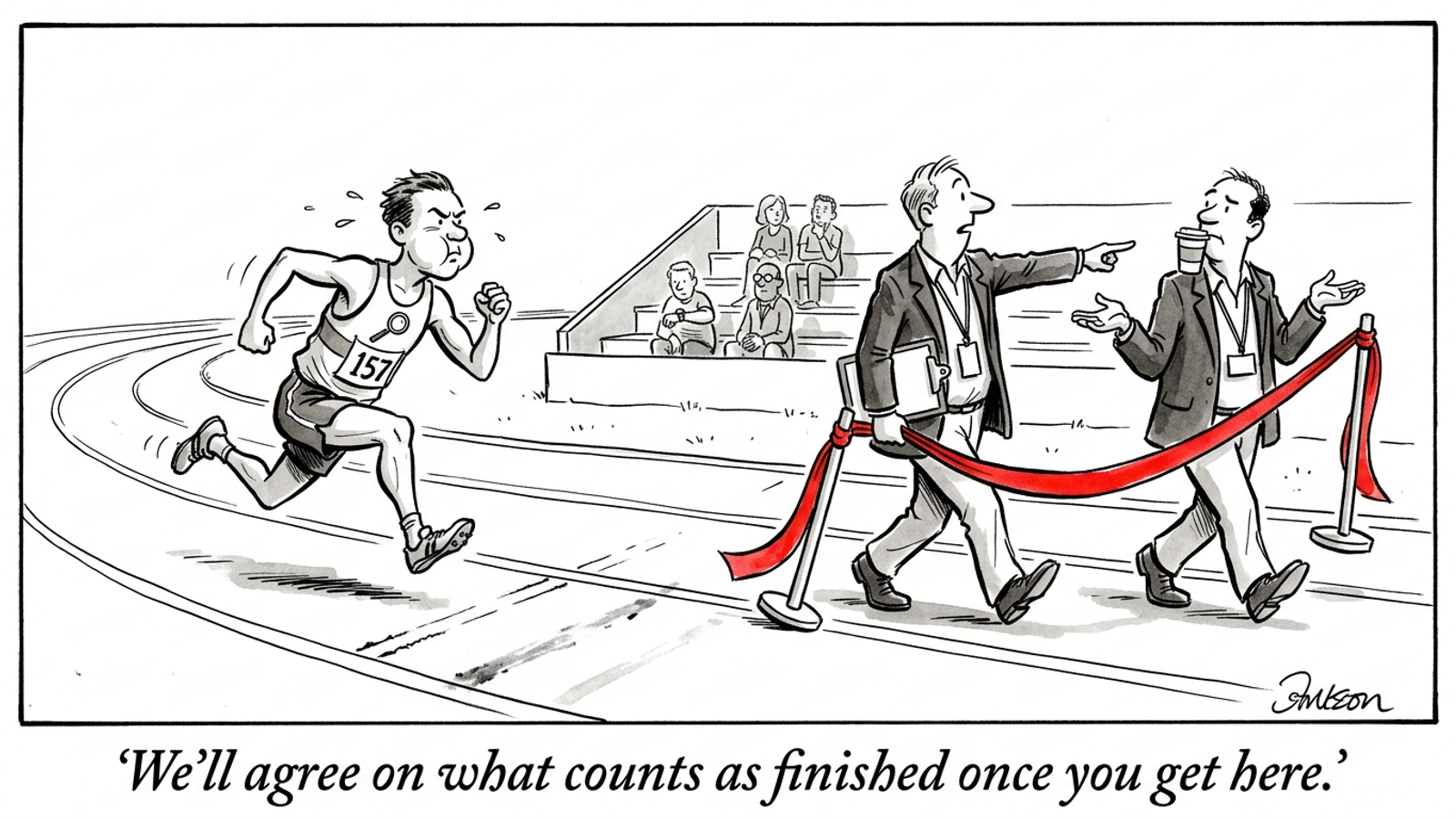
Most search partners would rather get paid on leads than on qualified pipeline. Should you let them? Smart operators disagree because a lead target can reward junk, while a pipeline target can punish good search work for bad sales follow-up. I come down on the side of pipeline, but only when the definition of qualified is locked in writing before money moves. Without that, you have not aligned incentives. You have scheduled an invoice dispute.
Position A: Pay them on qualified pipeline
The best advocate for pipeline starts with the thing a lead dashboard cannot tell you: whether sales would take the call. I used to tell clients that more leads at a lower CPL meant the account was working. I was wrong. In home services, it is easy to imagine cutting CPL by 40% in a month by loosening match and opening up broad service terms. The dashboard looks great. Sales gets an uncontactable list, price shoppers outside the service area, and students looking for jobs. You have built a form-fill farm: cheap to run, useless to own.
That is why buyers flinch at the word leads. B2B pay-per-lead programs run $50 to $500 per qualified lead and $300 to $800 per appointment. The buyer can pay for volume while carrying the risk that none of it goes anywhere. One practitioner teardown found PPC programs hitting lead goals and still getting blamed for no sales: an assumed 30-day cycle was really 60 to 90 days, and in one audit 85% of leads were disqualified on budget alone. When you pay for the fill, you should not be surprised to get fills.
The pipeline advocate changes the incentive at the point where that failure begins. With a raw-lead target, every optimization can lean toward the cheapest form submission: broader keywords, looser locations, three fields instead of eight. With a target based on sales-accepted opportunities that pass a budget check and have a decision maker attached, those cheap submissions stop helping. The target changes which searches are worth buying. The account has a reason to buy different searches.
There is an execution mechanism here, not just a better line in a contract. Feed offline CRM milestones back into Smart Bidding instead of treating every form fill as equal, and bidding can learn from the people sales accepts. Google’s write-up of that approach reports Learning Care Group getting 4x registrations at 22% lower CPL and StrataTech getting 72% higher lead-to-enrollment at 24% lower cost per enrollment, both while optimizing toward scored downstream events. The practical move is the one described in this switch from leads to pipeline signals: import the qualified stage, bid toward it, and use rejection patterns to get stricter about what should not be bought.
The strongest case for A
Say you spend $20k a month on search and sales rejects a third of the meetings. Under a raw-lead target, your partner can hit the number by bringing in more of the same. Under a written pipeline target, the account has a reason to make three changes:
- Exclude job seekers, students, and bargain queries that never become accepted opportunities.
- Shift budget away from broad educational terms and toward late-stage searches showing company size or buying intent.
- Let bidding learn from opportunities sales accepts, not every person willing to fill out a form.
None of that requires pretending every accepted opportunity will close. It requires refusing to count a form fill as success before anyone checks whether it belongs in the pipeline. Pay on qualified pipeline and junk stops being profitable to buy. Fewer meetings may be a better result if more of them are meetings sales can use. That is Position A’s case, and it is a strong one.
Position B: Pay on qualified leads or CPA, and own sales yourself
Now give the other advocate the same hearing. A search partner controls queries, ads, bidding, budgets, and what gets sent to a form. The partner does not control how fast a rep calls, whether the lead reaches the right queue, or whether anybody tries again after the first missed call. A pipeline target can put the partner’s pay in the hands of your sales operation. That is not accountability. It is a transfer of risk to the person with the least access to the lever.
Follow-up speed makes the gap hard to ignore. In the figures cited here, leads contacted within five minutes are 21x more likely to convert than those contacted after 30 minutes, yet only 7% of companies hit that window. The same figures say 48% of reps never make a second attempt, while 35 to 50% of sales go to whoever responds first. If a good demo request sits untouched, no negative keyword can save it. Slow follow-up turns qualified intent into a lost conversation, then the ads account gets the blame.
Picture a SaaS account spending around $20k a month. Demo requests match the ICP, but routing sends enterprise requests to an SMB rep queue on Fridays. Nobody touches them until Monday. If close rate falls by half, a pipeline-based payment can miss its target even though the clicks and requests were sound. I would not ask search to absorb that failure while sales treats routing as somebody else’s problem. Position B says to hold the partner to cost per qualified lead with clean tracking, then fix the queue yourself.
Timing matters too, though it is worth being precise about what is late. A sales-accepted opportunity can appear well before a deal closes. Pipeline is not closed-won revenue. Still, when sales takes time to confirm budget, route a buying committee, or record why a request was rejected, feedback arrives later than a form fill. The wider sales cycle also delays the evidence that accepted opportunities were actually worth accepting. The average B2B sales cycle cited here is 6.5 months, up from 4.9 months in 2019; deals under $25k average roughly 90 days, while deals over $100k can run six to nine months or more. Against a 90-day agency trial, that makes closed revenue a poor monthly yardstick. It also makes a vaguely defined pipeline milestone a tempting place to argue while everyone waits for the real outcome.
The strongest case for B
Say you run mid-market SaaS with a 120-day sales cycle and a five-person buying committee. A CPA deal can be the more honest contract: pay a fixed cost per demo that meets your ICP filters, say $350, and log every disqualification reason. Marketing owns volume and fit. Sales owns speed to lead, routing, and follow-up. Feedback on whether a demo meets the filters can arrive sooner than a closed deal, so the account has something useful to work with while the buying committee does its job.
That arrangement does not excuse junk leads. The quality gate is the point. It lets you ask whether search delivered the kind of person you agreed to buy without making the search partner answer for a rep who never called. It also makes disagreements inspectable: which filter failed, who rejected the request, and whether the account needs a change or the queue does. Pay for what search can deliver; fix what sales must do. That is Position B at full strength.
Where the two contracts break
Position A breaks the week someone redefines qualified after money moves. Marketing counts an SQL because the form shows the right title and company size. Sales rejects it because budget was never confirmed. Finance asks why pipeline coverage dropped. Nobody changed a bid, yet the payment changed. Pay-per-appointment offers hit a similar wall: a $150 to $500 price per meeting can look lower risk while rewarding volume and inviting disputes over what counted as qualified. If the acceptance rule is loose, every rejected lead becomes an invoice argument.
That is the part pipeline advocates sometimes skip. A downstream target does not automatically produce a shared definition of downstream. You have to decide whether a qualifying event is an accepted opportunity, what evidence it needs, who can reject it, and where the reason gets recorded. Otherwise, sales can move the gate while the partner is running toward it. Do not put pay behind a gate nobody has agreed to mark.
Position B breaks more quietly. A CPA target without a real quality gate can find the cheapest route to the agreed number: broader match, weaker intent, shorter forms, and more unqualified volume at exactly your $350 target. The invoice looks tidy. Your close rate does not. That is why the alternative cannot simply be pay per lead and hope sales sorts it out. It needs agreed qualification criteria and visible rejection reasons. An agreed cost per appointment in the $150 to $350 range is only useful if everyone also agrees what an appointment has to be.
So neither payment label does the work on its own. Pipeline can become a fight over sales acceptance; CPA can become a race to the cheapest acceptable-looking form fill. The difference is where I would rather put the fight. Cheap leads are a tax sales pays. I would rather settle qualification before the campaign starts than discover three months later that the CPL target was met by people nobody could sell to.
My verdict: choose pipeline, but write the gate first
I side with pipeline for the buyer who can make sales acceptance observable and stable. It gives the search account a reason to pursue opportunities rather than submissions. CPA is cleaner to administer and fairer when sales is messy, but a lead-based target keeps pulling attention back toward what is cheapest to capture. The single deciding consideration is whether both sides have signed the definition of qualified before money moves. If they have, I take the pipeline deal. If they have not, I take the CPA deal with a quality gate and fix sales first.
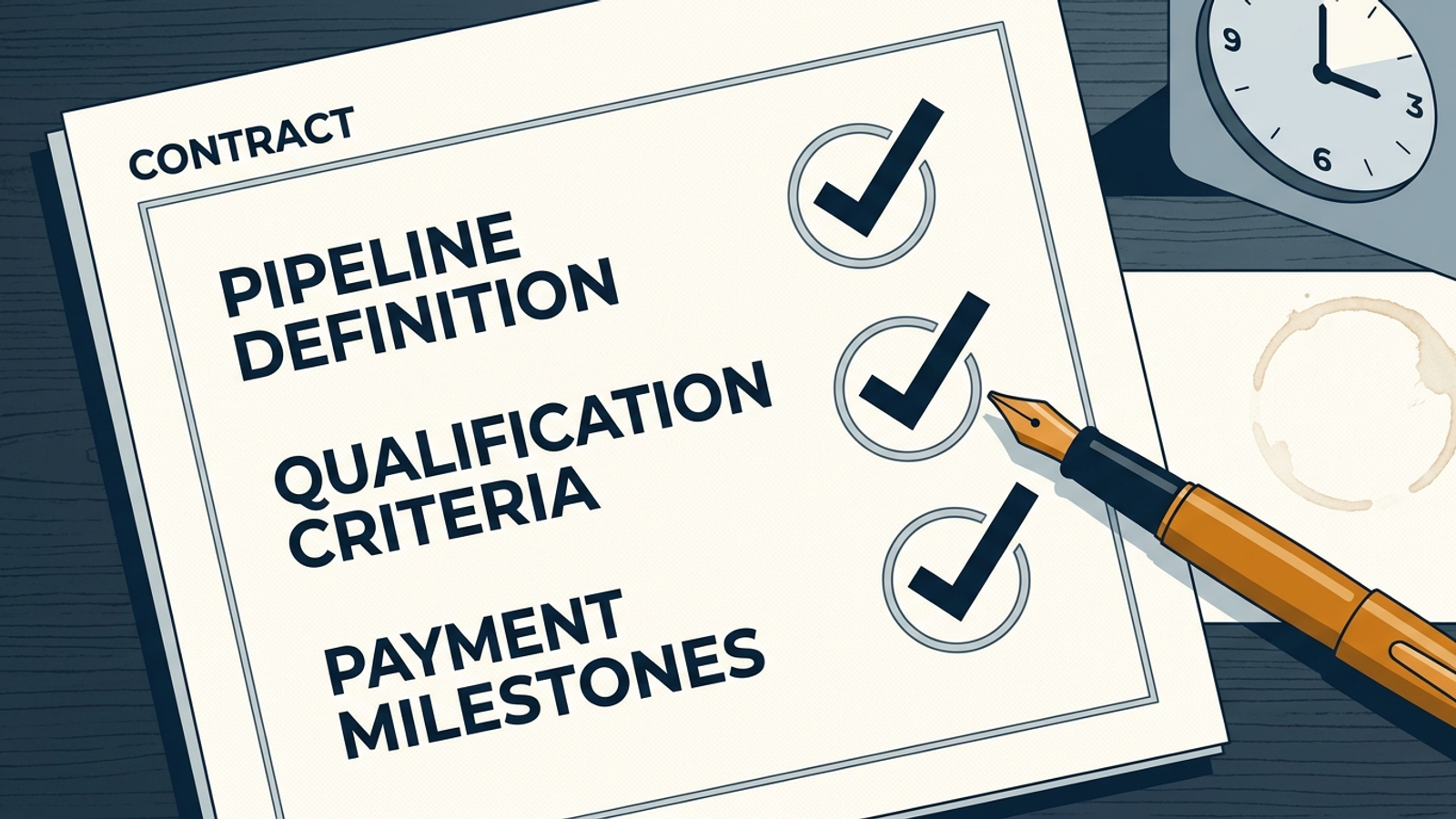
Put these three decisions on one page
The written definition is the decision that determines my vote. Two supporting rules keep it from falling apart in practice:
- Define qualified. Specify title, company size, budget confirmation, and who may reject an opportunity for which reason. Decide what must appear in the CRM for sales to accept it. No shared definition, no pipeline pay.
- Set the sales SLA. Spell out routing and follow-up, including a touch within five minutes during business hours and a second attempt logged in the CRM. If sales will not commit to its part, it cannot fairly hold the partner to the resulting pipeline number.
- Set the attribution window. State which touch gets credit and how long the partner waits for it: 90 days for that $20k SaaS example, longer for enterprise. Otherwise, a late acceptance can turn into an argument about whether the work counts at all.
Put the three on one page. The definition tells the partner what to pursue; the SLA tells sales what it must do with the result; the window tells both sides when to count it. That page is the contract, not the slide promising that everyone is aligned.
Who should take the CPA deal instead
Take CPA if your sales cycle runs past 90 days, follow-up lives in individual inboxes rather than a routed queue, or your CRM cannot show why a lead was rejected. A team with a 120-day cycle can spend month two arguing about deals that have not had time to close. That fight helps nobody. A cleaner interim deal is a fixed cost per lead meeting the ICP filter, with every rejection tagged to a reason and reviewed weekly. Search can act on the reasons that concern fit; sales has to act on missed calls and routing failures.
When the win rate on accepted leads holds steady for two months and speed to lead stays under five minutes, you have a better basis for moving the target down-funnel. Until then, pay for fit and volume, not for closes you cannot yet measure. That is not surrendering the pipeline argument. It is refusing to write a pipeline contract before you can tell whether sales accepted what search delivered.
The sentence that decides the deal
Put this in writing before anyone spends a dollar: Partner is paid on sales-accepted opportunities meeting the agreed criteria, credited within the agreed window, provided sales touches each lead inside the agreed SLA, with every rejection logged with a reason.
That sentence forces the decisions behind every pipeline-pay fight. It also answers the fee question buyers keep asking me. If you are tired of a percentage of spend, stop buying hours and start buying an outcome: either qualified pipeline under that rule or CPA with a quality gate. The same principle runs through the wider debate over whether your search partner should take a cut of revenue. Skin in the game only works when the game has written rules. I take pipeline when those rules are signed. Everywhere else, I take CPA and fix sales first.