

 LinkedIn
One marketer, five days, four developer hours. That is the entire budget, so I would not spend Day 1 writing another FAQ page for ChatGPT to cite. I would check whether its bots can get through the door.
Most small businesses chasing ChatGPT and AI Overview citations start with content. The cheaper first move is technical. AI assistants fetch robots.txt and specific answer pages before that writing can become a citation. On groas’s own site, robots.txt drew 1,199 live-answer fetches from Claude-User in 30 days. A polished answer behind a blocked crawler or an empty HTML shell has no chance to do its job.
This plan spends your time in order: access, readable HTML, answer-shaped pages, consistent business details, then discovery and measurement. The marketer owns all five days. The developer gets two hours on Day 2 and two on Day 4. Everything else must be doable in the CMS, Cloudflare or a text editor. No extra developer block appears on Day 5 to rescue a missed Day 1.
1. Day 1: Open the door before you write another page
Cost: two marketer hours, zero developer hours. Buys: a path for later fixes to be fetched.
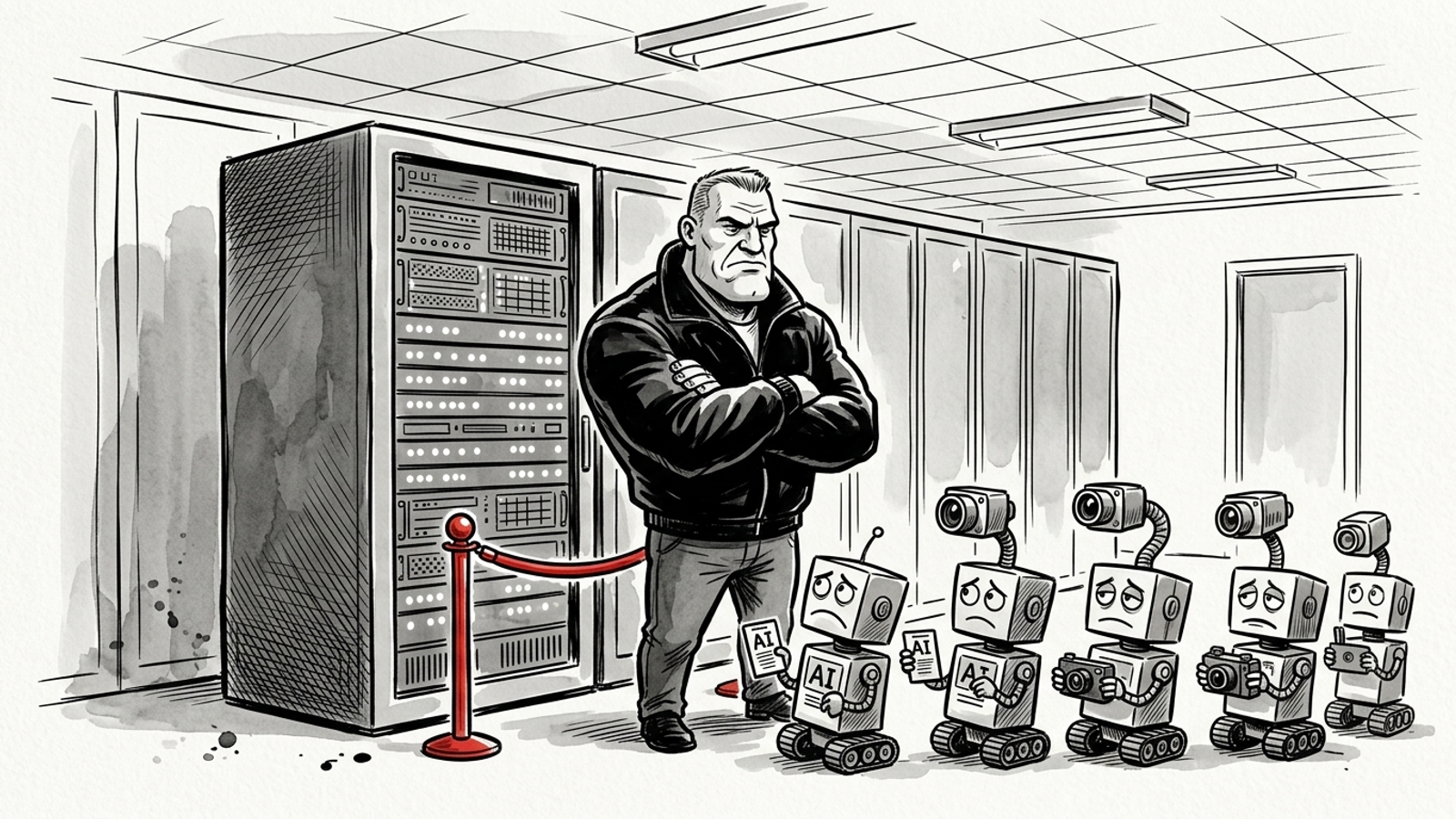
Open yourdomain.com/robots.txt and read it like a bouncer’s list. Check access for OAI-SearchBot, ChatGPT-User, PerplexityBot, Perplexity-User, Claude-SearchBot and Claude-User. These are the live-answer bots this sprint is trying to reach. If you want ready-made rules rather than a late-night exercise in remembering user-agent names, use the AI crawler swipe file.
Separate live-answer access from training access. GPTBot, ClaudeBot and CCBot serve a different purpose from the bots fetching material for answers. You can choose to block those training crawlers without treating every AI bot as the same thing. That distinction matters more than a blanket allow-or-block rule: the choice you make about training should not accidentally close the route to citations.
Then check the lock robots.txt cannot show you. Cloudflare’s Block AI bots setting can stop requests at the edge, before your server logs see them. Look in Security > Bots > AI Crawl Control and check whether the setting matches what you intend. A permitted bot in robots.txt is not much comfort if the edge returns a 403.
One trap worth leaving alone: Google-Extended and Applebot-Extended are not user agents to test with curl. Control those tokens in robots.txt, not with a firewall rule aimed at a visiting bot of the same name. Spend the remaining time writing down any blocked live-answer agents and the setting responsible. Day 2 needs a short list of failures, not a screenshot labeled “AI issue.”
2. Day 2: Put the answer in the HTML the bot receives
Cost: one marketer hour plus developer hours one and two. Buys: readable content instead of an accessible shell.
Access is not the same as readability. AI crawlers may fetch JavaScript files without executing the code that fills a page. If a price, service description, specification or FAQ answer appears only after hydration, the raw HTML can look nearly empty to the bot you just let in. That is why the rendering check comes before another afternoon of copy edits.
Test your three most important pages. Turn off JavaScript, reload each page, then use View Source to search for the answer text. Do not settle for seeing it in the browser’s rendered inspector; that can show content added after the initial HTML arrived. If the answer is missing from source, give the developer the failing URLs and the exact blocks that must appear in the HTML. Developer hours one and two go to server-rendering those blocks or moving them into static HTML. No redesign. No new template project.
Check the response as well as the words. Request each page with the relevant crawler user agents and look for a 200 response and a full body. A 403 or an unexpectedly small body gives you a specific access problem to trace. A 200 from a request using a bot’s name does not prove the real bot was admitted, though. Confirm that in server or Cloudflare logs when you can.
If you need a fuller handoff, use the 45-minute curl and CDN audit. Hand the developer the URL, missing answer text, response and relevant log line for each failure. Do not spend the two hours asking them to investigate a vague suspicion. By the end of Day 2, the important answer should be present in raw HTML and the access check should no longer be guesswork.
3. Day 3: Rewrite two pages a bot can actually quote
Cost: three marketer hours, zero developer hours. Buys: extractable answers on the pages that matter most.
Now content earns its turn. Review your five money pages, then choose the two weakest to fix properly. Trying to rewrite all five in three hours produces the familiar result: five new introductions, each saying almost nothing. The other three stay on the review list, not on today’s editing bill.
For each chosen page, put the direct answer in the first two or three sentences of its section, give each paragraph one idea, and make the section intelligible on its own. Phrase useful H2s as questions a customer might type. Put the answer immediately below the heading rather than making the reader cross three paragraphs of “in today’s landscape” to reach it. In a study of more than 34,000 responses, 44.2% of LLM citations came from the first 30% of content. You do not need to write for a machine to understand why burying the answer is a poor bet.
Use specifics already available on the page. If a service page can state a price range, service area and who the offer fits, put those facts where a reader can find them without opening a menu. If a section relies on the paragraph above it to make sense, rewrite the section. If you change prices, availability or other time-sensitive details, show an accurate updated date. A date is not a substitute for a correct answer; it tells readers when you last checked one.
This is also why a busy category page can be a weaker citation candidate than a plain page of dated, cleanly written facts. Forty product cards are useful for shopping. They are not necessarily a sentence an assistant can quote. Fix two answer pages well instead of ten pages thinly. Day 4 is for identifying the business behind those answers, not polishing more prose.
4. Day 4: Make the business details agree everywhere
Cost: two marketer hours plus developer hours three and four. Buys: a consistent entity, not a schema-shaped promise of citations.
Set expectations before opening a plugin. Adding JSON-LD barely moved citations in an Ahrefs test of 1,885 pages against 4,000 controls: minus 4.6% on AI Overviews, plus 2.4% on AI Mode and plus 2.2% on ChatGPT. Google also says you do not need special schema for AI Overviews or AI Mode. Schema is on Day 4 because matching business details is worth cleaning up, not because markup will manufacture a citation.
Give the developer a bounded job: one Organization or LocalBusiness block with a business name, address, phone and sameAs links that match the visible details. Add Article or BlogPosting to articles, Product with Review where reviews appear, FAQPage where the questions are visible, and Breadcrumb where it reflects the page. Use only the types that fit the actual pages. Markup that disagrees with visible content is not clever optimization; it is another inconsistency to maintain.
Your parallel job is less glamorous and more useful. Compare the name spelling, address and phone in the footer, contact page, Google Business Profile and LinkedIn. Correct the mismatches you can control. Brand web mentions correlated more strongly with AI Overview visibility than backlinks did in one analysis, but that is not a reason to buy mentions or add another plugin today. It is a reason not to leave your own business details at odds with one another.
At the end of the developer block, check the visible page against its markup. One true business identity in the places you control beats five schema types describing five slightly different businesses. Stop when the two developer hours are gone. The sitemap and baseline do not need them.
5. Day 5: Point bots to the right pages, then record the score
Cost: two marketer hours, zero developer hours. Buys: a discoverable set of pages and a baseline you can compare next month.
Open /sitemap.xml. Confirm it returns 200, lists indexable pages and uses honest lastmod dates. A related crawler audit found a sitemap 404 alongside an image disallow, duplicate organization IDs and backwards update dates. The useful lesson is not to hunt for exotic AI settings. Check whether the ordinary directions you publish actually work.
Remove thin tag pages from the sitemap, keep the two answer pages you rewrote in view, and check links to your five priority pages from the homepage or main navigation. No money page should sit more than three clicks deep. A bot cannot quote a page merely because it is in a sitemap, but you do not need to make an already busy crawl work harder to find it.
Then measure before anyone declares victory. Pick ten prompts customers actually type. Run them in ChatGPT, Perplexity and AI Overviews, and record the cited sources for each. Start with Perplexity as the first target for the next round of updates: its emphasis on freshness differs from AI Overviews’ closer connection to rankings. Where they help a reader, use FAQ question-and-answer pairs, comparison tables or numbered steps on the pages you improve later. Do not force all three formats onto a page that needs one clear paragraph.
Keep the ten-prompt sheet beside the access and rendering notes. A citation count without the starting count is a story you cannot test. The baseline is the last task today, not something to reconstruct next month.
What the four-hour budget cuts
Skip llms.txt this week. Google says a special machine-readable, AI text or Markdown file is not needed to appear in Search’s generative features. Under this constraint, even a quick extra file loses to an unreadable answer page. If you still want one, revisit it after the access and rendering work is finished.
Skip the mass schema plugin, too. Spraying auto-generated FAQ markup across 400 pages consumes the developer block and risks describing questions that are not visible. Skip the full blog rewrite: 30 old posts can eat the whole week while Day 1’s 403 remains untouched. Those are not permanent bans. They are cuts made against four developer hours and five working days. Access, two solid answer pages, one consistent entity and a baseline make this sprint worth doing.
The keep-open checklist
Keep this open while you work. Pass means verified, not assumed. The items follow the sprint order; the bold ones are easiest to skip when the week gets crowded.
- Allow the live-answer bots in robots.txt; decide separately what to do with training crawlers.
- Check Cloudflare’s AI bot controls; a 403 at the edge will not appear in server logs.
- Request the three priority pages with the relevant crawler user agents; check for 200 responses and full bodies.
- Find the answers, prices and FAQs in raw HTML; the rendered browser view is not enough.
- Check server or Cloudflare logs for real bot requests and their responses.
- Review five money pages and choose two to rewrite properly.
- Put each direct answer near the top of its section.
- Make useful H2s customer questions and keep paragraphs to one idea.
- Give changed prices or availability an accurate visible update date.
- Match the business name, address and phone across the site and profiles you control.
- Check that Organization or LocalBusiness markup matches those visible details.
- Use Article, Product, FAQ and Breadcrumb markup only where it fits visible content.
- Confirm
sitemap.xmlreturns 200, lists indexable pages and has honestlastmoddates. - Link priority pages within three clicks of the homepage or main navigation.
- Record ten prompts and their cited sources across ChatGPT, Perplexity and AI Overviews; skip this and next month’s result has no baseline.
When the constraint lifts
The five days make the site easier to access, read and cite. They do not make it the default citation. You have outgrown the sprint when bots fetch clean 200s but competitors still get cited, when prices or inventory change faster than you can update pages, or when one rendering fix exposes fifty more pages with the same problem. More Day 3 copy edits will not maintain all of that.
When the constraint lifts, give the work a cadence: recheck the ten prompts monthly, review logs for new blocks weekly, and keep one owner for names, dates and schema. If that owner is not on your team, hand ongoing technical work and citation tracking to groas, which runs paid ads, SEO and AI search together. The sprint bought access. The next job is to keep the answers worth finding.