

 LinkedIn
Four hours a week, 60 days, and $0 for new software: that is enough to pursue your first ChatGPT and Perplexity citations, but not by publishing more content. I would find the ten buyer questions where a competitor is already cited and you are absent, then fix the five pages best placed to answer them. Money first, volume second. It is the same way I used to triage a search terms report when the budget was too tight to indulge curiosity.
Eight four-hour weeks give you 32 working hours and four calendar days of buffer. That is the whole allowance. No thirty-post campaign, site redesign, or $300-to-$1,500-a-month visibility tracker. If you are asking what platform shows the gaps keeping your business out of AI answers, start with a browser and a free spreadsheet. A tracker can show you a gap; it cannot repair the page behind it.
This is for a solo marketer or founder with an established offer, an existing site, and a working knowledge of how customers buy. If your pages are not indexed and you have no market proof yet, start there instead. If you have a large team and an agency retainer, this deliberately narrow sprint is not your operating model. For everyone else, protect the four-hour block.
1. Week 1: Spend four hours finding buyer questions, not content ideas
Cost: 4 hours. Buy: a baseline and a shortlist of ten citation gaps. Do not open your CMS or sign up for a monitoring trial. Open a clean browser profile and a spreadsheet, then test twenty prompts that a buyer might ask before choosing a provider. Run each prompt in ChatGPT Search and Perplexity. Keep the wording exact so you can repeat the test in Week 8.
A question such as “what is field service management?” tells you little about who wins a sale. Test questions that demand specific, current comparisons instead:
- Comparative buying: “[Your Category] vs [Main Competitor] pricing and limitations”
- Specific constraints: “Best [Service] for [Specific Niche] under [Budget or Timeline]”
- Implementation objections: “How difficult is it to migrate from [Competitor] to an alternative?”
For each prompt, record whether the engine retrieved web sources, every cited domain and URL, whether your brand appeared, and whether a direct competitor appeared. Do not count an uncited brand mention as a citation. Research on ChatGPT Search retrieval is useful background, but your own results determine the queue.
Now filter for the rows that matter: competitor cited, you absent. Choose ten buyer questions from those gaps, favoring questions close to a purchase. If your first twenty prompts do not produce ten such gaps, log what you found rather than manufacturing a target. You can test more prompts only if time remains. The shortlist is a diagnostic, not a promise that you will rewrite ten pages.
Look at the cited pages before the clock runs out. Are buyers being sent to a competitor’s pricing page, a comparison page, a review directory, or a forum thread? The answer tells you whether the missing piece lives on your site, somewhere else, or both. That is more useful than a visibility score.
2. Week 2: Spend four hours turning ten gaps into five page assignments
Cost: 4 hours. Buy: five locked URLs and a production order. A large gap list is not a plan. I would rank it as I ranked search terms reports: find the money before chasing the volume. An informational question can draw attention without bringing anyone closer to a contract. “Average cost of a quarterly pest control contract for restaurants” is a better target for this sprint than “how does commercial pest control work.”
Score your ten shortlisted questions against three filters:
- Commercial proximity: Does the prompt ask about price, contract terms, vendor choice, limits, or migration for a specific buyer?
- Competitor presence: Does a direct competitor hold a linked citation for that question in at least one of your tests?
- Existing URL ownership: Do you already have a relevant page you can improve, rather than a new page you would need to research, publish, and get indexed?
Existing URL ownership matters because this is a 32-hour sprint. Cut questions that require a new site section, and cut broad definitions even if they look popular. Neither deserves the same calendar block as a buyer comparing suppliers.

Take the five strongest page assignments. If several prompts point to one URL, that is fine: the unit of work is the page, not the prompt. Give each target URL a primary buyer question, then record the competitor URL taking the citation and the factual gap your page needs to close. It might lack a clear price explanation, a usable comparison, or a direct answer to a migration objection. Do not write “needs more authority” and call the diagnosis done.
At the end of Week 2, close the sheet. Five pages, in order, are your production queue. The other gaps wait.
3. Weeks 3–5: Spend twelve hours rebuilding the five pages
Cost: 12 hours, four per week. Buy: five clearer answers and a crawl check for each updated page. Tackle one or two pages each week in priority order. Use roughly three hours per block for the rewrites and the final hour for technical checks and submission. If a page needs a full redesign to make its answer legible, it is the wrong page for this sprint.
I have seen plenty of marketing pages make a buyer work through several paragraphs of category history before revealing the one constraint that decides the purchase. A person can scroll. A retrieval system looking for a relevant passage has other candidates. Put the answer where both can find it.
For each page, make these edits in order:
- Lead with the answer. Put a concise answer beneath a heading that matches the buyer’s question. If you cannot publish a price, state how pricing works and what you can verify. Do not invent a range to fill the space.
- Show the comparison. Where the facts support it, use a simple HTML table for your offer, the competitor, and the limits a buyer actually weighs. Specific constraints beat adjectives. Check every competitor detail before it goes live.
- Support the claims. Add real specifications, documented numbers, and inline references where you have them. Do not turn “responsive support” into a made-up resolution rate because a number looks more citable.
- Remove the detour. Cut repetitive introductions, vague industry commentary, and copy that postpones the answer until after a sales form.
The GEO study discussed here makes a case for concrete evidence and sources over keyword repetition. I would use that as an editing principle, not as permission to paste statistics into a page that cannot substantiate them.
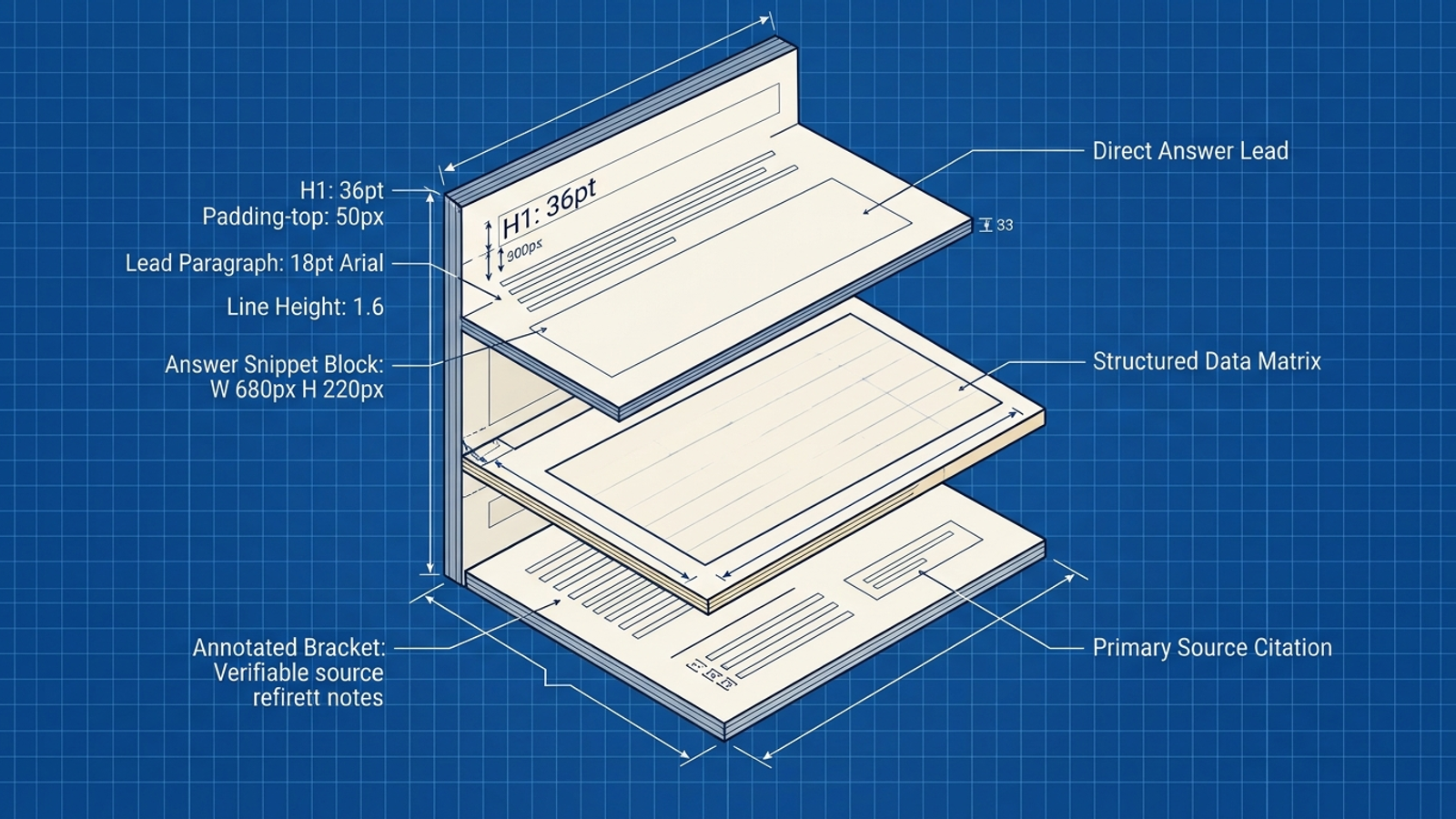
Use the last hour of each weekly block to check the pages you touched. Confirm that the updated URLs are publicly accessible and that your robots.txt does not accidentally disallow OAI-SearchBot or PerplexityBot. OpenAI distinguishes its search crawler from its other bots, and Perplexity documents its crawlers separately. If your hosting provider or firewall blocks their published IP ranges, check that too. Then use Bing Webmaster Tools to submit the revised URLs and check indexation. A submission is a request, not proof that an answer engine will cite the page.
What gets cut here is the tempting sixth rewrite. Ship and check the five pages you chose before widening the queue.
4. Weeks 6–7: Spend eight hours pursuing relevant third-party mentions
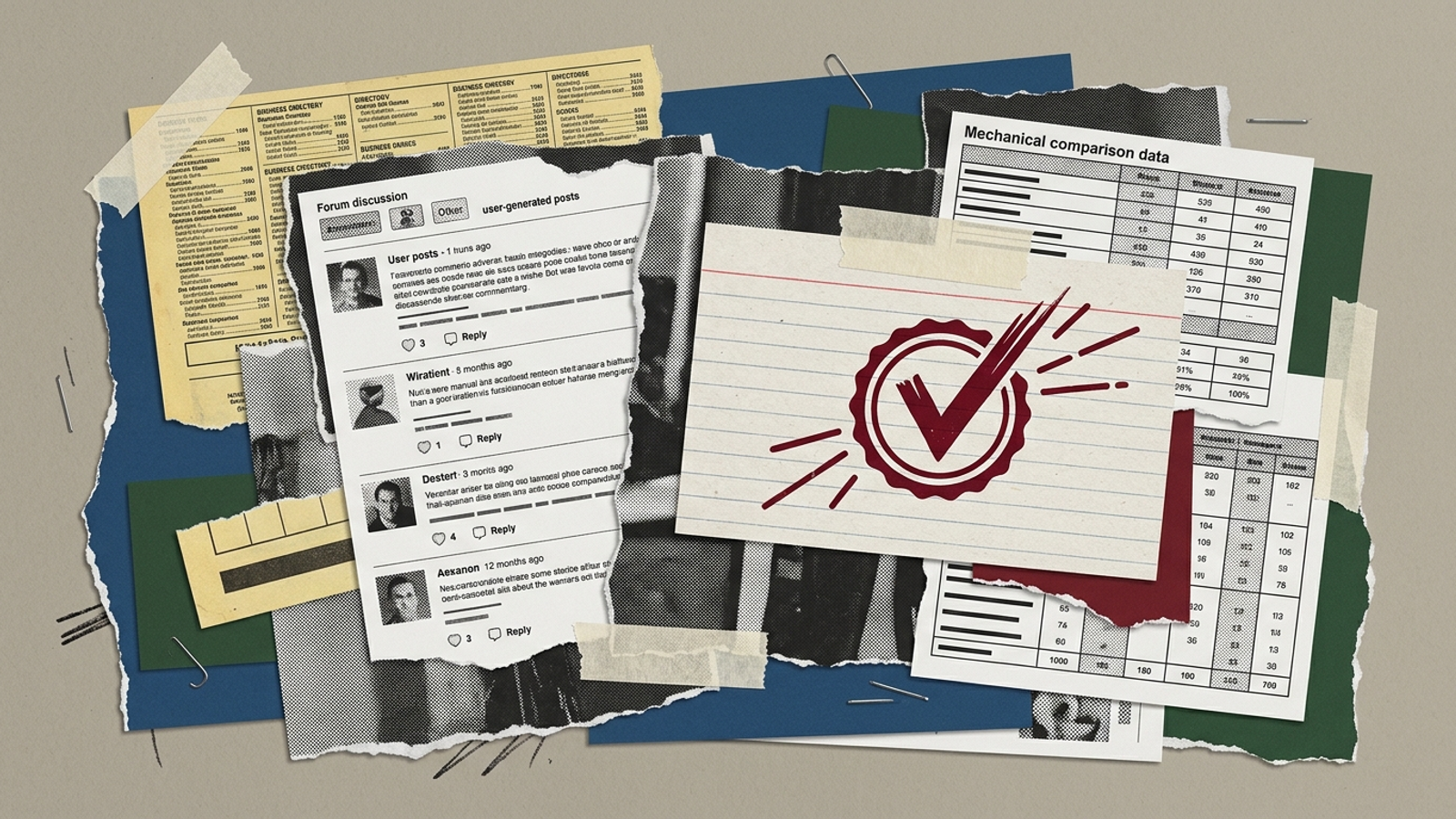
Cost: 8 hours. Buy: five credible outreach or profile actions, not five guaranteed placements. Your own pages can answer buyers directly. They cannot, on their own, provide the independent perspective a comparison query may pull from a review directory, forum, or industry guide. Return to the source cards from Week 1 and look at the third-party pages the engines actually cited.
Choose one appropriate off-site action for each of your five target questions:
- An active forum discussion: Contribute a substantive answer if you can address the buyer’s question within that community’s rules. Do not paste an ad into an old thread.
- A relevant directory: Claim or complete your profile, fill in factual service fields, and request genuine client reviews where appropriate. You control the request, not whether a review arrives this week.
- An industry comparison guide: Send the editor a documented correction if a specification or price is out of date. Give them a reason to trust the correction, not a demand for a link.
Comparative citation patterns and Perplexity domain analyses help explain why these sources deserve a look. Your Week 1 source cards make the choice specific. If a directory already appears in the answer to your target question, completing that profile is more defensible than posting ten new articles and hoping one wanders into view.
Some actions will not produce a mention within two weeks. Log the URL, action, date, and outcome anyway. Do not count an email sent as a citation earned. This block buys a chance to appear in sources buyers and engines already consult; it does not buy editorial control over them.
5. Week 8: Spend four hours repeating the test
Cost: 4 hours. Buy: a result you can compare with Week 1. Open the same browser profile, use the same twenty prompts, and test both engines again. Log linked source URLs and brand mentions separately. Check your five primary questions first, then the rest of the original set. Do not quietly change a prompt because a new version gives you a better answer.
Look for two outcomes:
- Direct citation: An updated page appears as a linked source for a target buyer question.
- Brand inclusion: The answer names your company in its main prose, whether it cites your site or an off-site source.
A linked citation and a brand mention are not the same result. Neither is a sale. If you can connect an inquiry to one of these answers, record that separately rather than declaring every mention attributable revenue.
Do not expect a clean sweep or treat one missing citation as a reversal. Research on citation drift shows that cited sources can rotate. A result in two or three of your five target questions would be a useful foothold; zero tells you to inspect the pages, crawl access, and cited alternatives before doing more of the same. The point of the retest is to learn what changed, not to award yourself a visibility trophy.
6. When the four-hour constraint lifts: fund execution, not another report
Cost against the sprint: 0 hours. Buy: a decision about what deserves ongoing capacity. The 60-day plan ends after eight weekly blocks, with four calendar days left as buffer. Keep the ten-question shortlist and the Week 8 results. They show where another round of work has a plausible buyer payoff.
The manual method starts to break when prompt checks consume the time needed to fix pages, when a large catalog or many service areas create more page work than one person can maintain, or when changing answers demand a faster response than a weekly block permits. At that point, another dashboard that lists forty citation drops may only produce forty more tasks.
That is where an autonomous organic search engine makes more operational sense for groas’s audience: continuous execution within guardrails, with a named human strategist responsible for direction and accountability. The test is still the one I would apply to any paid-search account. Does the work move toward qualified pipeline and revenue, or does it just make the reporting prettier?
Until that constraint lifts, leave the software demos closed. Open the spreadsheet, test the buyer questions, and spend this week’s four hours on the gaps your competitors already occupy.