

 LinkedIn
Google has turned a free search surface into paid inventory before. In 2012, merchants who had spent years formatting product feeds for free visibility watched Google Product Search become the pay-to-play Google Shopping.
That history matters now because AI answers are following a familiar path: publishers supply useful material, people learn to rely on a new search format, and ads enter the space around the answers. Businesses that earn organic citations now can establish a presence that later entrants may have to rent. It is not a promise that every citation will become an ad slot. It is a reason to take the free opportunity seriously while it exists.
The dated path runs from Product Search through Perplexity, Google’s Search Generative Experience, AI Overviews, ChatGPT search and AI Mode. At each turn, I care less about the interface demo than the question an operator has to answer: what changed about earning visibility, and what stopped working?
May 2012: Product Search becomes paid Google Shopping
For years, retailers uploaded and maintained product feeds for Froogle and Google Product Search without paying for the placement. They supplied titles, prices and inventory in a format Google could use; shoppers grew accustomed to finding visual product results in Search. On May 31, 2012, Google announced that Product Search would become Google Shopping under a commercial model. By October, free merchant listings had disappeared from the shopping box in favour of Product Listing Ads.
For practitioners, the change broke a comfortable assumption: technical optimisation might win valuable placement, but it did not make that placement permanent. A retailer could still have a clean feed and relevant products, yet keeping a presence in that shopping module now required media spend. The feed work remained useful; the terms of visibility changed.
That is the precedent, not a claim that AI answers will replay 2012 detail for detail. When a platform owns the interface, publishers do not get to decide which part stays free. Build organic visibility, certainly. Do not confuse access today with a guarantee about the surface tomorrow.
December 2022: Perplexity makes citations part of the answer
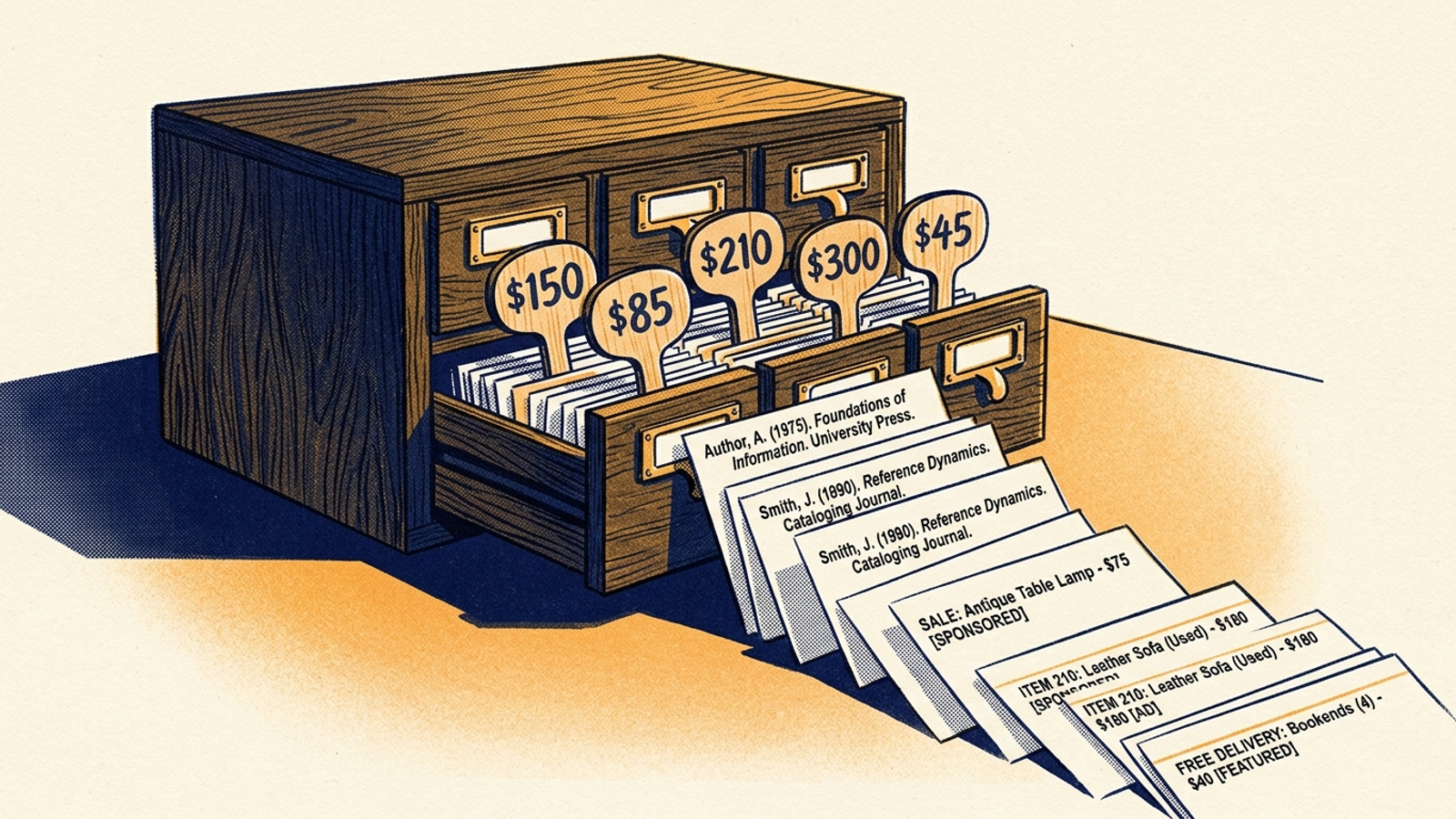
When Perplexity launched its conversational answer engine in December 2022, it put numbered links beside synthesised answers. The mechanism was simple and important: a reader could get a direct response, then follow a citation to inspect the source. The source link was no longer one of ten results to choose from before reading. It was attached to the answer after the engine had done the choosing.
That shifted the job for a business hoping to appear in a buying answer. A page could cover a topic exhaustively and still make the useful fact hard to extract. A concise passage or clear table could make a specific price, limit or feature easier to find and cite. Think of a buyer comparing software seat limits and fees: the passage that states the terms plainly does more work than an introduction explaining what software is.
This did not make long pages worthless, and it did not establish a universal formula for citation. It changed the unit worth examining. The page still matters, but the answerable passage matters too. If a source cannot be checked against a clear statement on the page, a numbered footnote does little for the reader or the business behind it.
May 2023: SGE puts source cards above the familiar results
At Google I/O on May 10, 2023, Google introduced Search Generative Experience (SGE) in Search Labs. Its expandable AI Snapshot put a generated summary near the top of the results page, with linked source cards alongside it. The placement changed the operator’s question from ‘Where do I rank?’ to ‘Will this answer use my page, and will the reader see the link?’
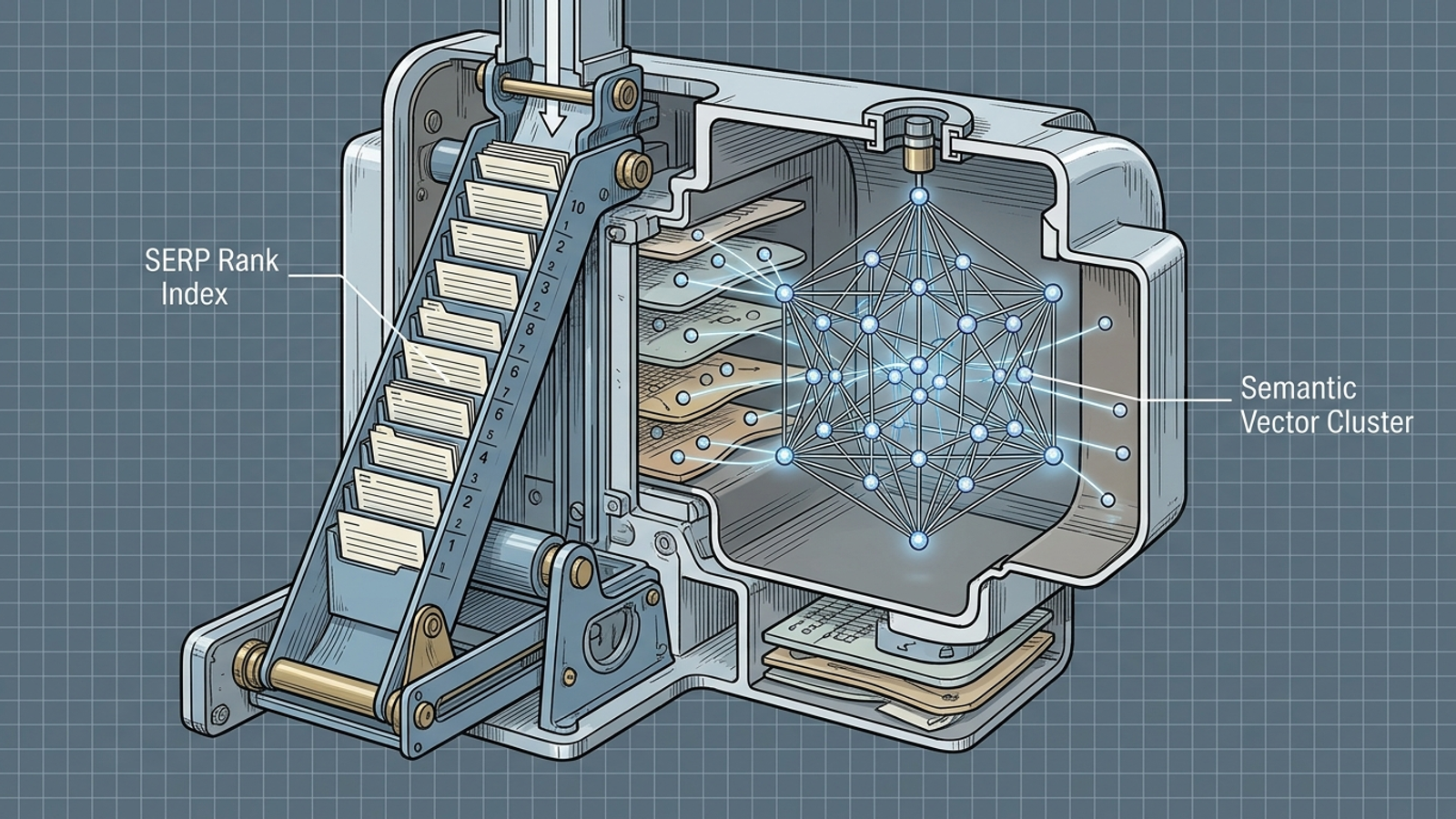
The first reassuring pitch was predictable: defend your top organic rankings, keep talking about E-E-A-T, and the Snapshot will cite you. That was too neat. SGE could draw on a page outside the leading results or use a discussion thread while passing over a page in position one. A traditional ranking was still valuable, but it was not a reservation for a source card.
The practical break was between ranking a page and supplying the passage an answer needs. If a prompt asked for one narrow comparison, a broad guide could lose that citation to a less prominent source with a direct, checkable response. Practitioners had to inspect the answer itself rather than infer AI visibility from an ordinary rankings report. That is less comforting than another dashboard column, but it is the work.
May 2024: AI Overviews leave the lab and take the fold
On May 14, 2024, Google brought SGE into general availability as AI Overviews for US users. What had been an experiment became part of the search experience at scale. BrightEdge reported AI Overviews across roughly 48% of its tracked queries, averaging more than 1,200 vertical pixels in height. That much space can push familiar organic results well down the screen.
The immediate problem was not that every search suddenly ended without a click. It was that a top organic ranking no longer described what a searcher saw first. An answer could satisfy the query before the reader reached the classic links, while a citation inside that answer became the more prominent route back to a source. Measuring only blue-link position missed a material part of the page.
This also raised the standard for attribution. A mention in generated prose, a clickable source card and a visit to the site are different outcomes. I would not call all three ‘AI traffic’ and declare victory. Track where the brand appears and what that appearance produces. The interface had changed; the reporting vocabulary needed to catch up before anyone could judge the work.
October 2024: Google adds ads to AI Overviews; ChatGPT adds search
On October 3, 2024, Google rolled out ads inside and beneath AI Overviews for US mobile queries. Existing Shopping, Performance Max and Search campaigns became eligible for placements marked ‘Sponsored’; advertisers did not need a separate campaign type to enter the new surface. The lesson from 2012 was no longer just historical colour. An answer format that included unpaid sources also carried paid inventory.
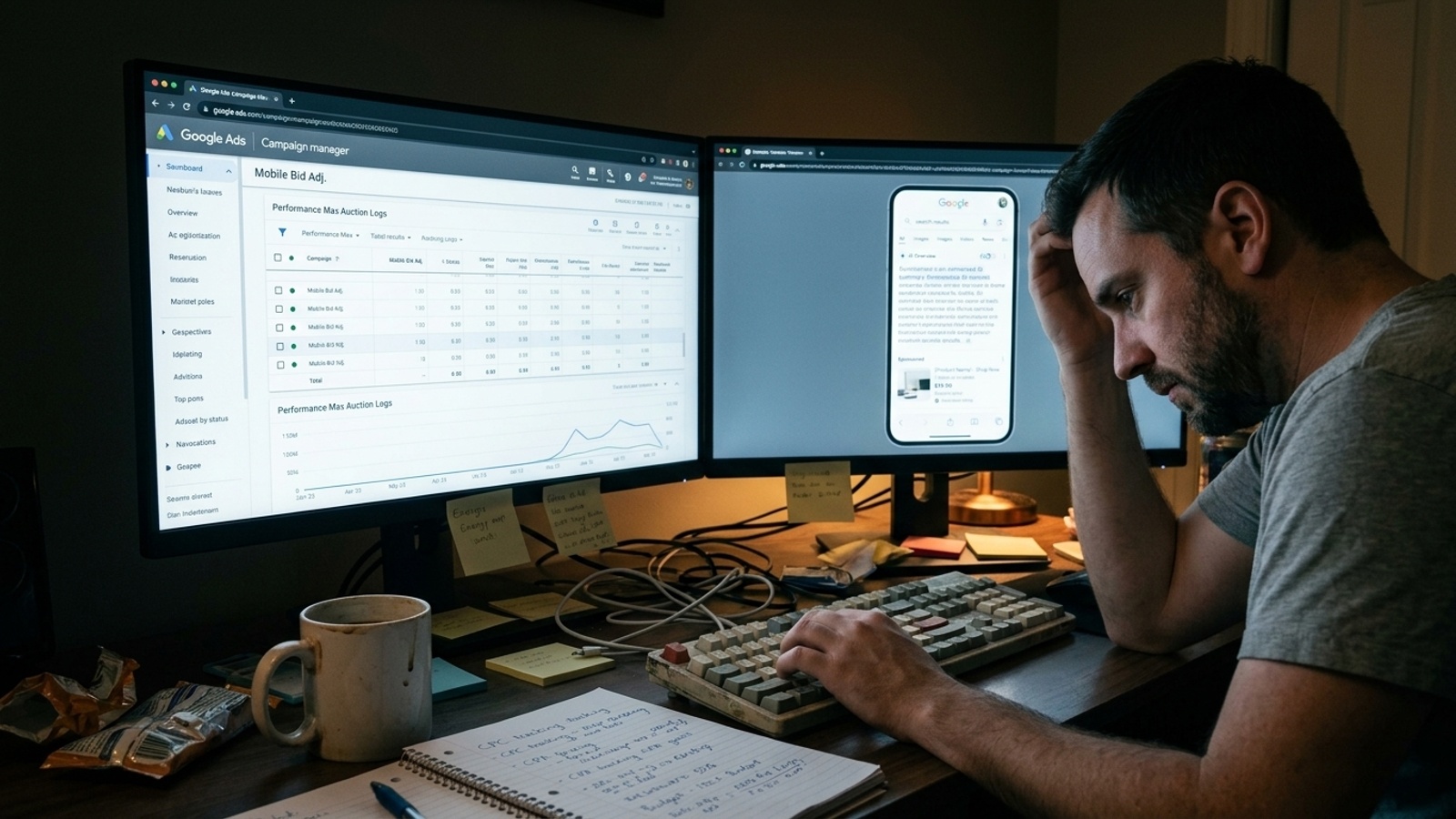
That did not mean an ad bought an organic citation, or that citations disappeared. It meant a business now had to distinguish two ways of appearing in and around the answer: earn a source link by supplying material the system uses, or compete for sponsored visibility through the eligible campaigns. Treating those as the same placement would make both the budget discussion and the organic report worse.
Four weeks later, OpenAI introduced ChatGPT search on October 31, 2024 to Plus and Team subscribers, followed by a rollout to free users in December. It brought live web information and source links into a conversational answer. For a marketing team, this widened the problem beyond one Google results page: a buyer could now ask a follow-up question, receive a synthesised response and use the cited link to verify a claim.
The two October developments pull in the same practical direction, even though they are not identical products. Paid placement was entering Google’s answer surface while another answer engine made source selection part of search behaviour. A business needed its claims to be easy to retrieve and verify, and its paid-search decisions to reflect the placements actually available. One polished rankings report could not do both jobs.
May 2025: AI Mode fans queries out, so audit what engines can use
On May 20, 2025, Google rolled out AI Mode across the US. Its query fan-out approach runs multiple related searches behind the scenes to assemble an answer. Instead of treating a user’s prompt as one keyword phrase, the system can pursue its component questions. That makes a vague claim of topical authority less useful than information that answers those components plainly.
The answer still has limited room for sources. An operator cannot assume every relevant page will receive a visible citation, and a cited page may answer only one part of the original question. Make important claims retrievable, checkable and accessible before polishing another general-purpose guide. The checklist below is an audit, not a recipe for guaranteed inclusion:
- Put the answer first. State the relevant fact near the start of a descriptive section; do not make the reader wade through an introduction to find it.
- Use readable comparison tables. Put features, specifications and pricing in text a reader can inspect, rather than hiding the comparison in a difficult-to-render widget.
- Keep entity details consistent. Check that current brand information on the site does not conflict with old pricing or descriptions elsewhere.
- Check the third-party picture. Look at the directories, forums and discussions a buyer may encounter, not only the copy you control.
- Track a fixed set of buyer prompts weekly. Record citations and mentions across ChatGPT, Perplexity and Google AI Overviews; a weekly alarm for what AI search says about your business is a practical starting point.
- Check crawler access and delivered HTML. Confirm important pages are reachable under your bot policies and return readable content. This is the step easiest to skip: a carefully written answer cannot earn a citation from a system that cannot retrieve it.
2026: The remaining free space is worth competing for
The advice that has aged worst is the claim that a high organic ranking automatically earns an AI citation. One analysis put 76.1% of AI Overview citations among top-10 URLs, with a median ranking of three. That is a reason to value conventional SEO, not a guarantee that a particular top-three page will appear in an answer. The distinction matters when a client asks why a well-ranked guide is absent from a source card.
Two other shortcuts deserve the same scepticism. A 4,000-word guide does not win because it is comprehensive if the answer is buried. Schema markup does not force a citation when the rendered page lacks a clear claim to cite. For the page-level mechanics, groas has a passage-first guide to getting cited in AI Overviews and ChatGPT. The useful test is more prosaic than ‘AI optimisation’: can someone find the answer, check it and tell which business supplied it?
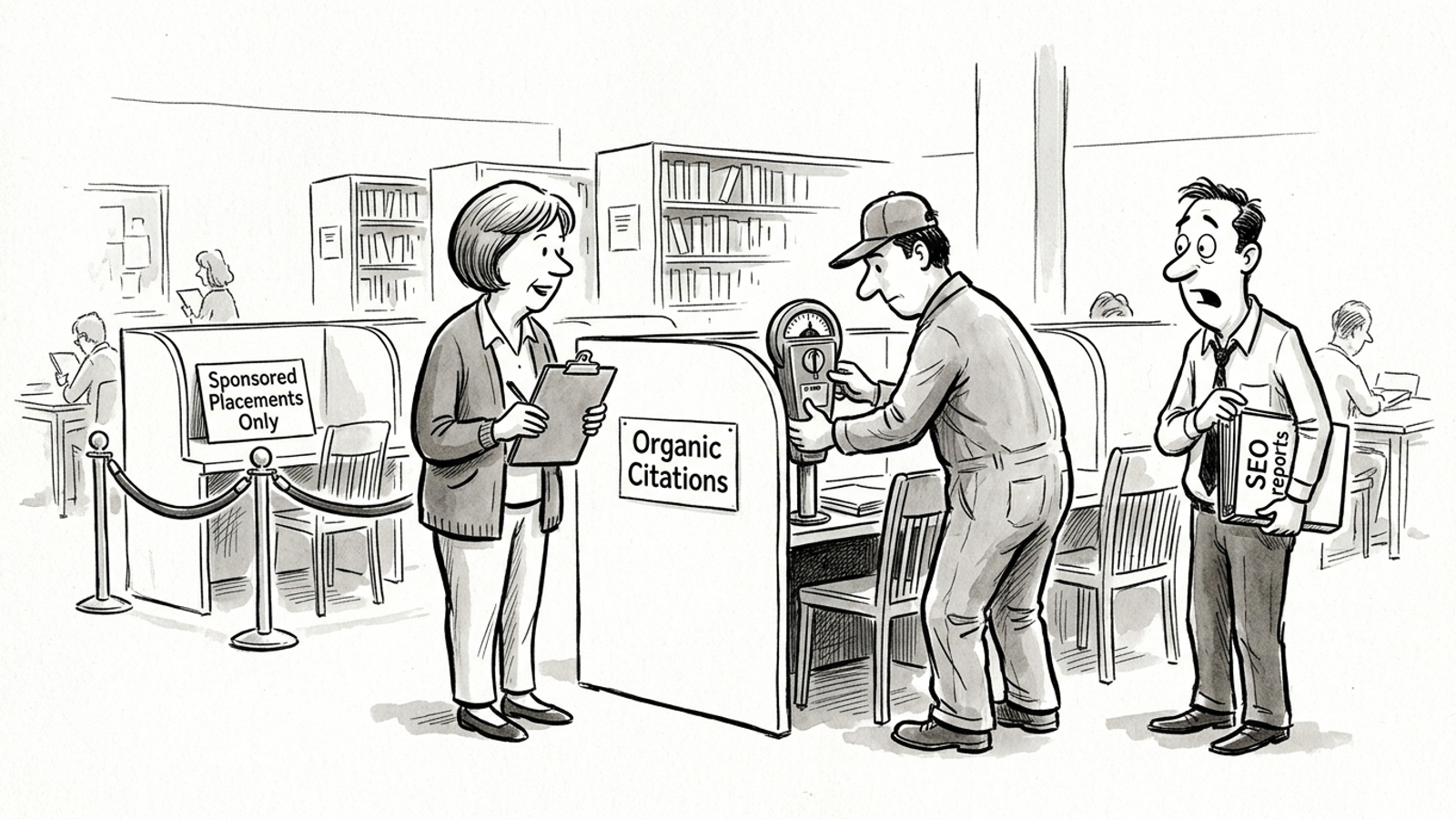
I would not pretend the record proves that Google will replace every organic citation with an ad. It does show a paid placement arriving inside AI Overviews soon after their general launch, against the older precedent of Product Search becoming paid Google Shopping. Those are enough to make waiting an expensive-looking strategy. Free citation space is an opportunity with platform-controlled terms, not property you own.
A business that waits until sponsored placements dominate its planning will have to buy visibility while it catches up on the basics: accessible pages, direct answers and a presence in sources outside its own site. Paid search has a job here, and groas manages paid auctions and organic visibility together through autonomous execution. But paying for a placement does not excuse leaving an earnable source link on the table.
That is where the line points next. More answers will compete for the reader’s attention; more businesses will compete to be among their cited sources; paid inventory already sits in the frame. I would build the organic footprint now, measure whether it holds, and use ads for the visibility that needs buying. Do not pay auction prices by default for ground you still have a chance to earn.