

 LinkedIn
If you are the marketing lead whose CEO just pasted a ChatGPT screenshot into Slack with “Why aren’t we in this?”, do not buy a dashboard to turn that screenshot into a chart. Your next move is to find the specific answers buyers need that your content does not give them.
I know the cold knot that message brings. For ten years in performance marketing, I fielded the paid search version: an executive searches for their own product, misses the ad because their IP address is outside the campaign’s geographic radius or the hourly budget cap is exhausted, and concludes the team has stopped doing its job. Your CEO has done the modern equivalent. They type a loose prompt like “best enterprise billing software,” see three competitors and an outdated trade blog, and decide your company does not exist in the future of search.
That screenshot does not establish your baseline visibility. Generative answer engines are probabilistic models, not fixed telephone directories. In a study by SparkToro and Gumshoe.ai testing 2,961 prompts across 600 volunteers, ChatGPT had less than a 1% chance of returning the identical list of brand recommendations twice for the same prompt, and less than a 0.1% chance of returning them in the same order. Research from the University of St. Gallen found that cited-source overlap between consecutive days across major AI answer engines was 34% to 42%. Your CEO pulled the lever on a statistical slot machine once, saw three lemons, and hit send.
The screenshot is not the danger. The danger is what you do before Friday’s status meeting: sign up for a monthly tracker, export twenty red charts to show you take the issue seriously, and promise to overhaul the website. A monitoring tool can graph an absence. It cannot correct one.
Three panic moves to skip this week
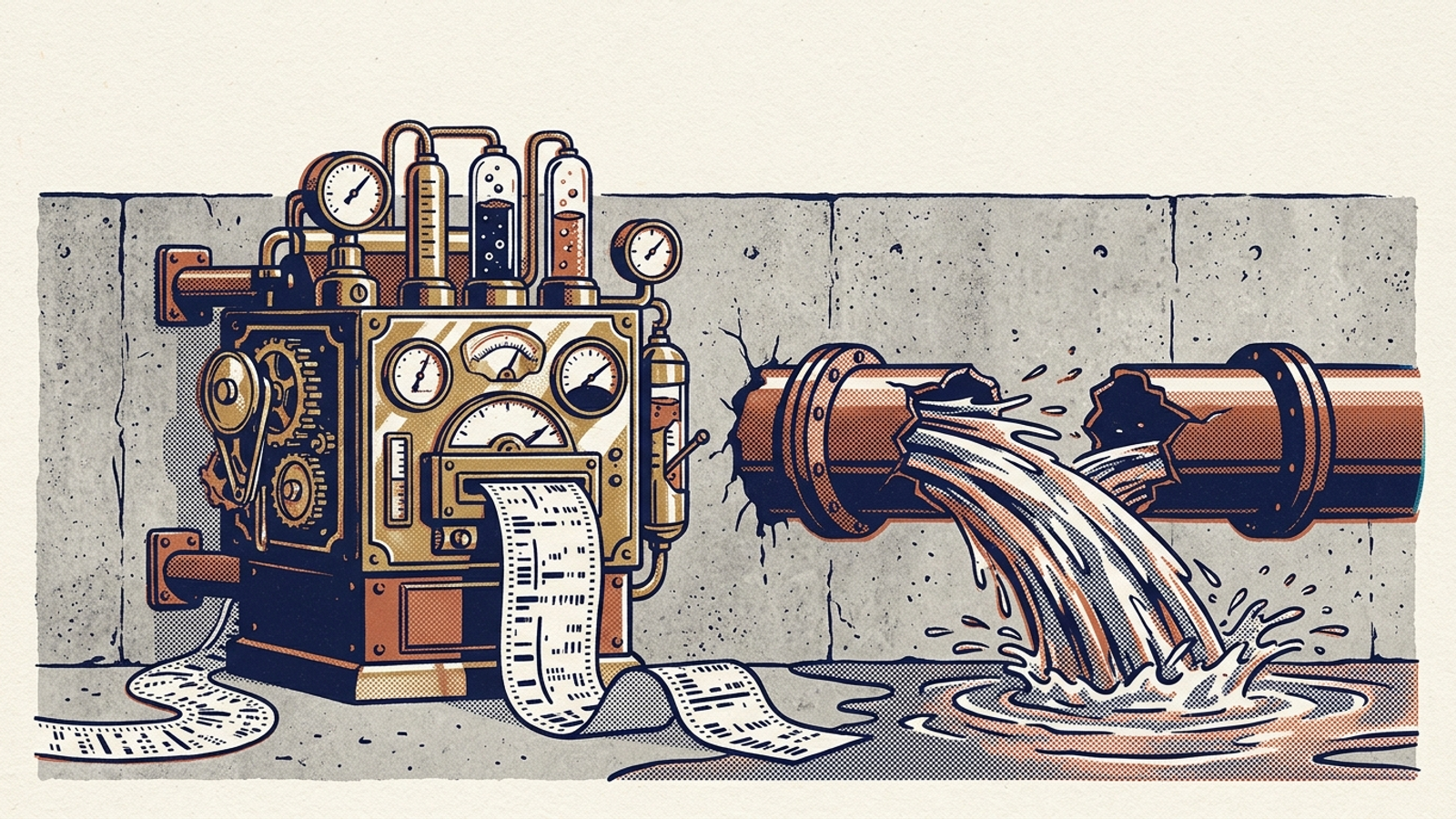
Do not buy a monitoring dashboard just to confirm the screenshot. Tools like Profound ($99 to $499 a month), Peec AI (€89 a month), and Otterly ($29 a month) can run synthetic prompt tests and give you pages of charts. Handing the report to your executive feels like action. But as I have argued before, your AI visibility report is a screenshot until it shows what changed. A tracker will not write comparative specifications, fix a page that needs JavaScript to display its content, or give buyers an independent source that corroborates your claims. You can pay every month to see the problem you already saw for free.
Do not rewrite your homepage. When an executive panics about search visibility, the classic agency instinct is to cram category definitions, integration bullets, and comparison tables above the fold. But a broad value proposition is not the answer to a narrow question about, say, multi-entity tax reconciliation against a legacy rival. That question calls for technically specific documentation. Diluting your homepage risks hurting the page that converts human visitors without supplying the answer the buyer asked for.
Do not promise a date when you will “rank in ChatGPT.” In Google Ads, I can clean up match types or add five hundred negative keywords and give a client a reasonable expectation for when CPA might settle. Generative engines do not work that way. Answers vary, and crawlers revisit pages on different schedules. Promise a win by next Friday and your CEO may run the same four-word prompt on Saturday, see a different answer that still omits you, and think the work failed. Promise work you control instead.
What the missing mention can actually point to
When an AI answer leaves you out, it is not necessarily punishing your brand. Look for a dead end between the buyer’s question and an answer the engine can use. I would check three places.
-
The answer is missing. B2B websites often trade declarative specifications for poetic claims. A buyer asks whether your software supports automated SCIM provisioning with Okta or how per-seat pricing works past fifty users. Your site offers a post about “frictionless workforce identity.” A competitor’s documentation gives a plain answer. The engine has something concrete to extract from their page and nothing equally specific from yours. That is not a messaging problem you fix with a bolder adjective.
-
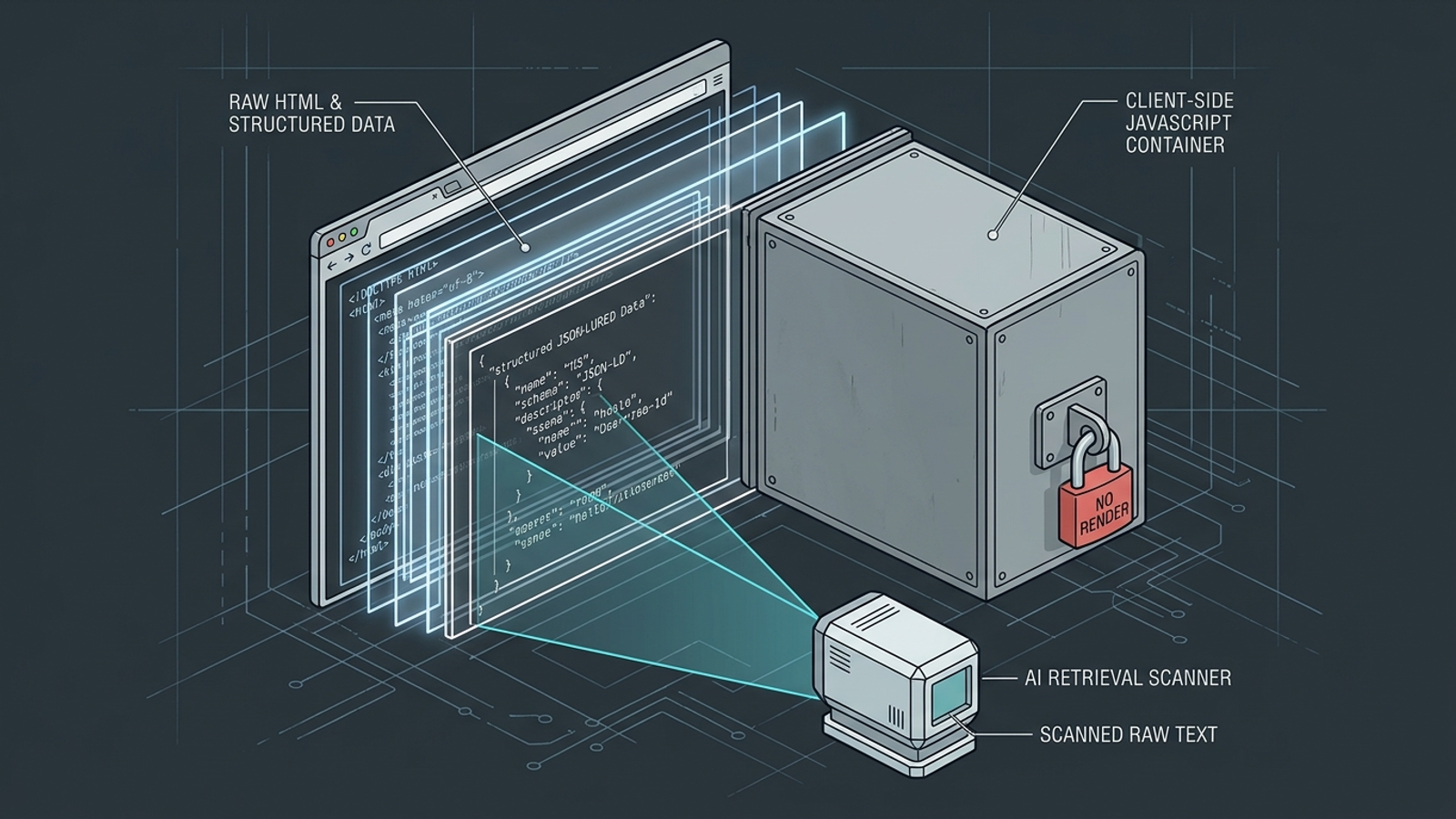
The answer exists, but the crawler cannot read it. An 18-check infrastructure audit across 50+ websites by Citability.dev attributed 80% of technical AI citability failures to client-side JavaScript rendering and aggressive edge firewall rules. If your feature matrix or pricing tiers appear only after the page renders in a browser, a crawler inspecting the initial HTML may see an empty container. Check
robots.txt, too. OpenAI’s crawler documentation distinguishes GPTBot, used for training, from OAI-SearchBot, used for live ChatGPT Search results. A blanket block aimed at training can also shut out live search. Before commissioning another article, find out what your pages actually return.
- Nobody outside your site backs the answer up. A vendor’s self-reported claim stands on thinner ground when no independent source repeats it. Technical search analyses describe the role of third-party sources such as G2, Capterra, Reddit, and industry forums in retrieval. If your site alone claims the fastest sync speed in the category while a competitor’s documentation aligns with reviews and an integration directory, your homepage slogan has a hard job to do. Make your factual information consistent wherever buyers go to check it.
Those dead ends give you something useful to investigate. A prompt-monitoring score, by itself, does not tell you which one you hit.
Find buyer questions before you write another page
Your CEO tested a vanity query. A buyer evaluating software can ask something much messier: “Which billing engines support multi-currency recurring invoices with NetSuite integration under $2,000 a month without requiring custom API engineering?” That question contains the constraints that decide a purchase. It also tells you what an answer would have to cover.
You already have better prompt research than a list of generic category terms: recorded sales objections and paid search query logs. Teams mining voice-of-customer data from Gong or Chorus call transcripts can see how buyers phrase tradeoffs. Your search terms show what people typed before they reached you. When buyers repeatedly ask a sales rep about a workflow or search whether a tool charges per seat or per transaction, you have a question worth answering in plain language.

You can use a platform to investigate the gap, but know what you are buying. A capable diagnostic tool should show which attributes, integrations, and competitor names appear together in answers that omit you. It might flag that a competitor appears in 70% of responses about SOC 2 compliance while your domain appears in none. That is a lead for investigation, not a fix. The tool will not write your compliance page, make its important details readable in raw HTML, or update an industry directory for you. Buying the tracker without a way to publish and improve the missing answers is like paying for a gym membership and expecting someone else’s muscles to grow.
The next 30 days, in order
If I stepped into your seat tomorrow, I would not start with a slide deck. I would move from crawl access to buyer questions, then to factual pages and outside corroboration. Fix the path to the answer before you measure how often the answer appears.
-
Days 1 to 7: Check what crawlers receive. Inspect your server configuration and edge security rules. Confirm that
OAI-SearchBot,PerplexityBot, andBingbotare not being stopped by Cloudflare challenges or blanket firewall rules. Fetch the raw HTML for your core product and pricing pages before JavaScript runs. Are the feature comparison table, integration list, and pricing tiers there? If not, move those critical specifications into server-rendered HTML or static prerenders. A polished page in your browser is no help if the relevant content is absent from the response a crawler gets. -
Days 8 to 14: Pull questions from conversion data. Review the last ninety days of Google Ads search terms. Filter for converting queries of four or more words, then compare them with objections in your sales call notes. Look for recurring constraints: multi-currency support, accounting integrations, data residency compliance, migration costs. Gather fifteen to twenty questions that reflect evaluation, not just awareness. Those are the prompts your content needs to answer.
-
Days 15 to 22: Publish five unglamorous specification pages. Skip the 2,000-word essay on where the category is headed. Write factual comparison and integration guides around the questions you found. Lead sections with direct statements about what your product does, then provide the relevant limits and details. Add structured JSON-LD schema for product entities, specifications, and pricing tiers where appropriate. Give retrieval engines clear factual blocks rather than asking them to infer a capability from a slogan.
-
Days 23 to 30: Align outside information and measure pipeline. Update your attributes on G2, Capterra, and relevant category directories so they match the verified features on your site. Where people are already discussing options in your category, make sure accurate technical documentation is available to support the claims they encounter. Set up conversion tracking for AI referral traffic. Then look at pipeline, not a synthetic prompt score that changes every time someone refreshes a chat window.
You may not see a neat upward line in thirty days. You will know what buyers ask, whether your pages can be read, what answers you have published, and whether visits from AI search turn into commercial activity. That is a better position to report from than twenty red charts.
What to say when your CEO asks on Friday
Do not walk into the meeting with fifty pages exported from a dashboard you bought on Tuesday. Bring a baseline and the operating plan. One answer is a reason to investigate, not a measure of market share. Explain that answer lists vary, so the screenshot cannot tell you whether qualified buyers consistently miss you. Then turn to the questions that matter commercially: when a buyer asks about your integration limits, pricing tiers, or compliance standards, can an answer engine find your facts, read them, and find support for them elsewhere?
Put the four-week sequence on one slide. Show the buyer questions pulled from sales calls and search terms, the five specification pages you plan to publish, and the crawl issues you are checking on product and pricing pages. Report what has been fixed and what remains unverified. That replaces a defensive apology with work your CEO can inspect.
If your team is stretched between active campaigns and this new workload, that capacity problem is why we built groas. It runs paid ads, SEO, and AI search as one integrated system around the clock, with technical fixes and content updates deployed within defined guardrails and a named strategist accountable for the outcome. The point is not to own another view of the problem. It is to have the work done.
You do not need to win an argument with a screenshot. You need to answer the buyer questions it has made impossible to ignore. Close the dashboard pricing tabs. Go inspect your server payloads.
Alexander Perelman