

 LinkedIn
If you are the agency owner who just got a client email asking, “Why don’t we show up in ChatGPT?”, you know what came with it: a screenshot, a competitor named in the answer, and the polite version of a threat. What are you doing about this?
I am writing because you are about to do what I would have done in 2015. You are about to pick an AEO platform, add it to 12 retainers, and discover three months later that you bought monitoring. It shows the gap. Your team still closes it. At five clients, that is annoying. At 10 or more, the hours left behind become your margin problem.
What the dashboard leaves on your desk
Your client’s question sounds like one job. It is four: find where they appear in AI answers, diagnose why they are missing, fix and publish the relevant pages, and work on the citations that may change those answers. A 2026 AEO cost guide makes the division plain: monitoring tools track and report rather than create or publish content. The content, schema and off-site work stays with you or an agency.
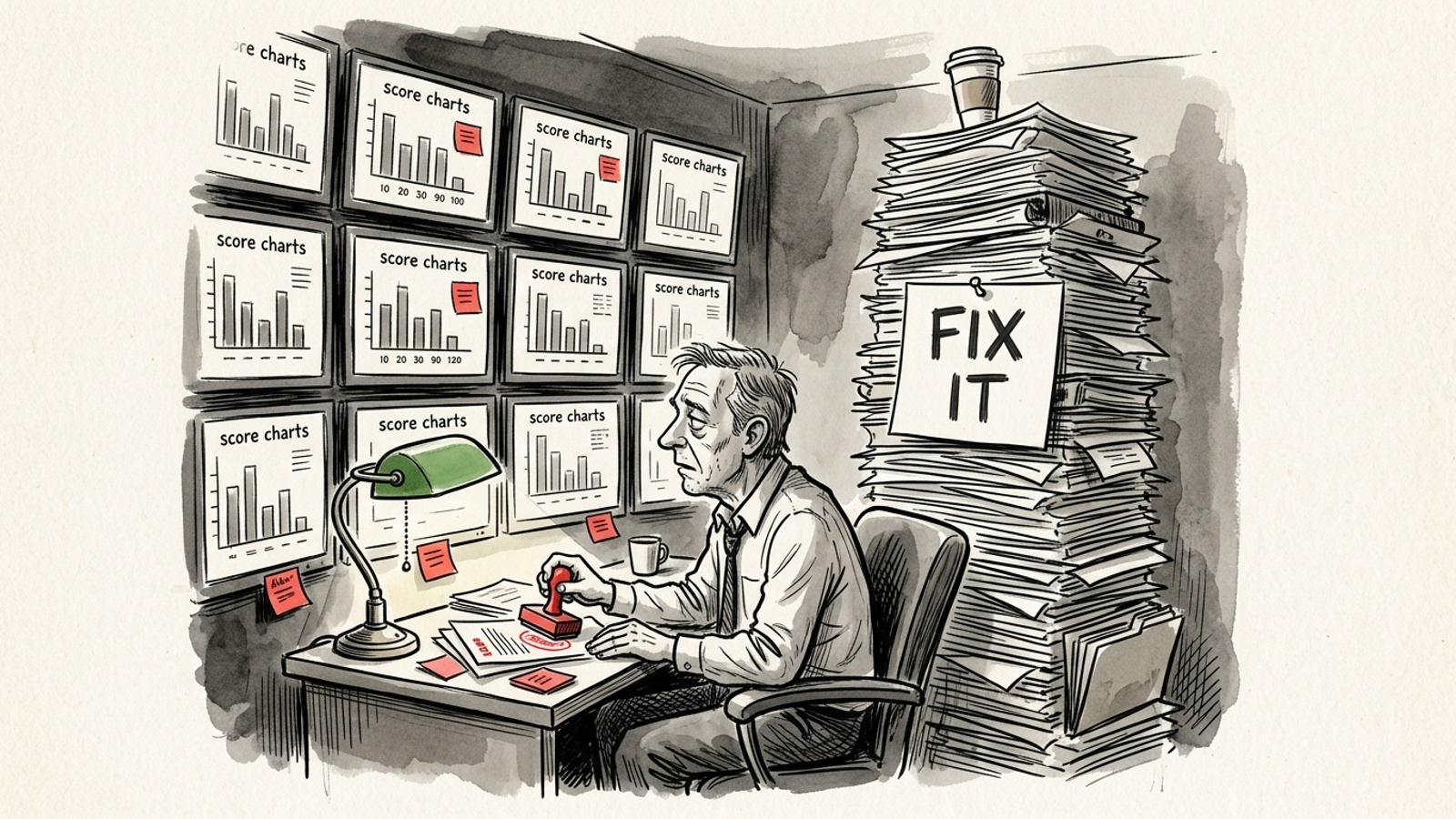
Watch the demos with that division in mind. A 23-platform comparison warns that a clean monitoring dashboard is not a content execution platform. A recommendation to create content is not an execution plan with an owner and a publish date. I used to tell PPC clients my tools “flagged opportunities.” I was wrong to charge as if flagging was fixing. What the deck calls visibility management, I call a to-do list your junior now owns.
One agency-focused review calls many of these tools thermometers, not GPS: they show that visibility dropped, but leave teams exporting data to diagnose and fix the problem. I know that export. In PPC, it was the search-terms CSV at 1am. In AEO, it is a prompt report that says your client was not cited, with a Fix it button that means you fix it.
The work it leaves is familiar: clear technical obstacles so AI crawlers can read the page, rewrite and publish the page itself, then pursue citations elsewhere. HubSpot’s AEO product surfaces recommendations for you to act on, while a hands-on test described its content tools as still in beta. The same test found that Mentions watches and advises but leaves fixes on a Kanban board for your team (HubSpot guide; hands-on test). That board is your payroll.
So sort each demo into two piles. One shows the score. The other executes work and shows you what changed. Do not put the first pile on a retainer as though you bought the second. That is where white-label AEO that leaves the work to your team is just a dashboard stops sounding like a slogan and starts looking like a staffing plan. Ask who does the fix before you ask how the report looks.
The 10-client bill: software first, people next
Here is the total before the line items. Among the listed plans, a white-label tier with unlimited sites is $399 a month, while a per-domain tracker at $99 for each of 10 domains is $990 a month, before extra prompts or seats. The larger cost is delivery: one 10-client AEO retainer model estimates $14,050 to $23,700 a month when the team must do the work the tool identifies. That is a model, not your invoice. Put your own hours beside it.
| Recurring line item | Listed price and source | What to check at 10 domains |
|---|---|---|
| Entry tracker | Otterly Lite: $29/month, 15 prompts, one workspace (price table) | An entry price is not a 10-client price. Check domain and workspace limits before spreading those 15 prompts across retainers. |
| Per-domain tracker | Semrush: $99/month per domain, 25 prompts and one user (hands-on test) | Ten domains cost $990/month before add-ons. |
| Extra prompts | $60/month for 50 additional prompts (same test) | Work out how many prompts each client needs; do not buy a headline price and assume coverage. |
| White-label tracker | Mentions Agency: $399/month, white-label, unlimited sites (same test) | Reporting is easier to package. Your team still needs to act on its advice. |
| Execution alternative | groas SEO and AI Search: from $199/month per client domain, including content, technical fixes and citations (groas for agencies) | Ten domains start at $1,990/month. Compare that with tracking plus the work your team would otherwise do. |
Those are listed recurring costs, not the whole cost of launching the service. A pricing roundup lists Peec at $95 for 50 prompts, $245 for 150 and $495 for 350; Otterly at $29 for 15, $189 for 100 and $489 for 400. A separate price read puts Profound Starter at $99 a month for ChatGPT only, one seat and no API, with Growth at $399 adding three engines. Vendors can display a flat monthly price while the coverage you need lives further up the ladder. Check domains, engines, prompts and users on the quote, not just the pricing card.
Keep the hidden work in a separate column. Each month, someone has to interpret the report, decide what matters, rewrite pages, file technical tickets, pursue citations, publish changes and explain what happened to the client. The three to five hours per domain per month in the retainer example becomes 30 to 50 hours across 10 domains. You may also face one-off setup and structural fixes. Their cost depends on what is broken and who can fix it; a subscription price does not tell you either. Price that work before you promise the service.
The cheapest mistake is treating the $29 plan as if it covers 12 clients. The most expensive is staffing around the gap without putting those hours in the retainer.
I have billed for the work a tool now does
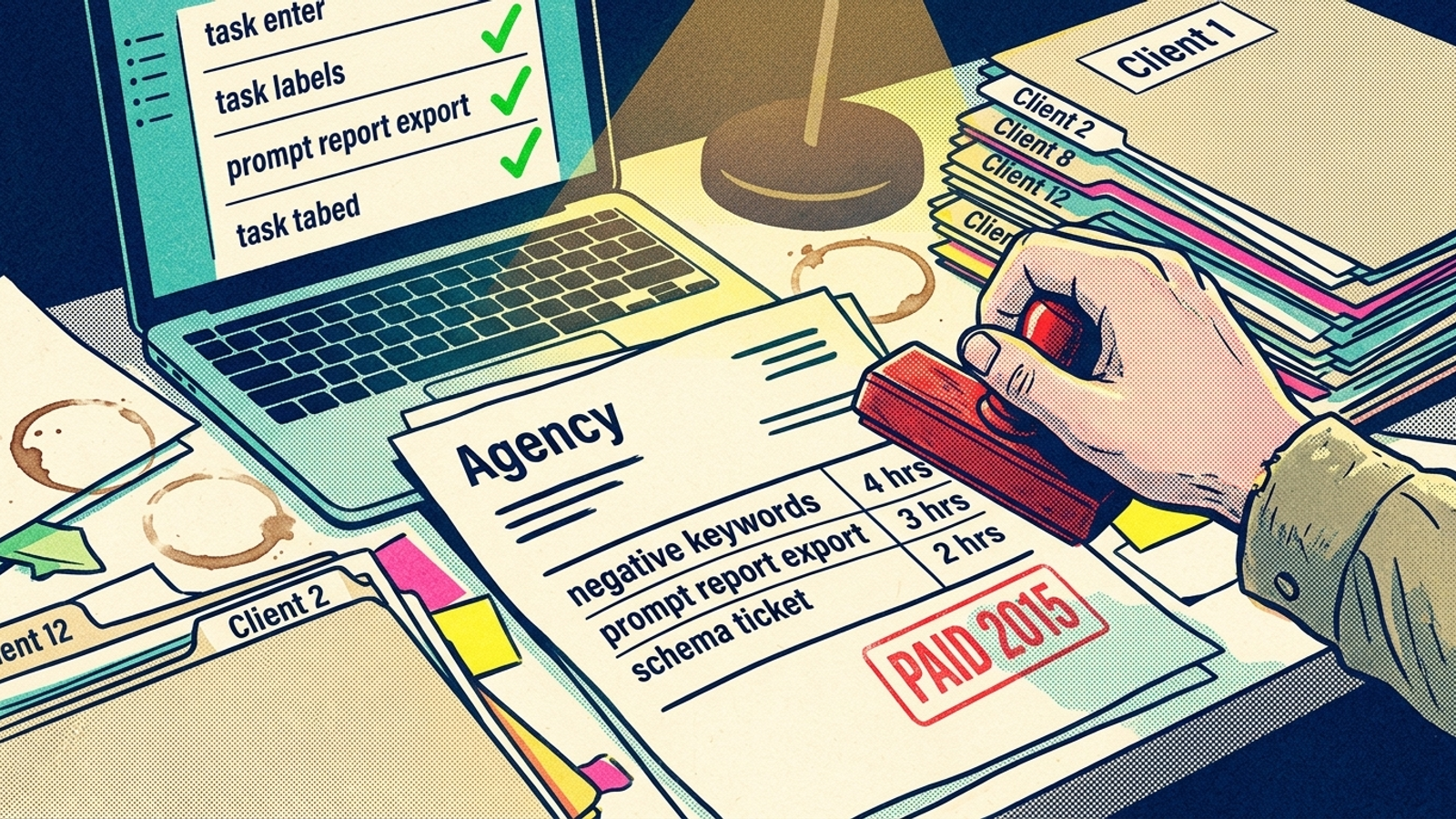
I know why a monitoring retainer is tempting. In PPC, I could charge a real retainer for negative-keyword mining, bid tweaks and a monthly report that took four hours once I had the template. Clients paid because they could not see how long the work took. Then Smart Bidding ate the bid tweaks, scripts ate the mining, and a client asked why his 15% of spend bought him 90 minutes of my month. He was right to ask.
The current AEO version has the same weak spot. GoodFirms puts software at $29 to $699-plus a month and agency retainers at $1,500 to $50,000-plus, with many mid-size teams using a platform alongside agency projects for structural fixes. When the tool shows where your client stands but never rewrites content or builds schema, your retainer pays for that labour. Eventually, your client will ask what it bought.
They may forward your report to a friend with a cheaper tracker. They may ask why Peec or Otterly shows the same missing citation for less, and what your extra $1,500 did to change the answer. “We monitored it closely” will not carry much weight. “We published three pages, fixed the schema and earned two citations; here is the log” is an answer. Those numbers describe the kind of work you should be able to show, not a promise that every client will get the same result.
That is why I stopped selling visibility and started selling completed fixes, with the changes logged where the client can see them. Bill for what changed, not what you watched.
Three questions to ask before you sign
1. Who executes the fix, and where is it logged? Ask for a completed client example, not a slide labelled workflow. Have the vendor show you a technical fix applied, a page published or a citation pursued, and the corresponding record of what happened. You are not asking them to earn a citation during a four-minute demo. You are asking whether the product ever gets past the recommendation.
If the handoff is an export, an API or a ticket your team files, you have found the hidden headcount. One platform comparison breaks operating cost down by prompts, frequency, engines, brands and languages, users, integrations and internal people. The workflow gap creates that final line. Tracking without a fix step forces manual work, and manual work consumes the retainer. I run this question first because it ends a lot of demos quickly. Keep these five questions to ask before you buy another dashboard nearby if you want to press further.
2. What happens to my price when client 11 arrives? Ask the vendor to quote your actual mix of domains, prompts, engines and seats in writing. Profound Starter is ChatGPT-only. Peec lets you pick three of six engines, with Claude and Grok as paid add-ons, while Otterly charges extra for Claude, AI Mode and Gemini. The visibility-tools roundup also reports that 91% of cited URLs appear in only one LLM. If you report on one engine, be clear that you are reporting on one engine.
Then price the coverage you intend to sell. Peec Pro at $245 has 150 prompts; Otterly Standard at $189 has 100. Semrush adds $99 per extra domain and $60 for 50 extra prompts (same roundup). A $95 plan with 50 prompts sounds different when 12 clients each need 30 prompts across five engines. If the vendor cannot price 15 domains in writing, you are the margin buffer.
3. Can I show the client the change, not just the score? Ask to see the report you would forward at the end of the month. If it contains a visibility score, a sentiment chart and suggested prompts, expect the client’s next question: what did you do?
One 2026 roundup describes an agency-built option starting at $79 a month with white-label exports, scheduled client digests and unlimited seats. That can solve the logo problem. It does not, by itself, solve the labour problem. Look underneath the digest for a fix shipped, a page published or a technical block cleared. Without a record of the work, your team must write the story from scratch every month. Ask for the work log, not another prettier chart.
You do not need me to tell you which pile to pick. You know what happened the last time our industry sold monitoring as management. Count the hours the tool leaves behind, price them at what your people actually cost, and put that number next to the retainer before you add client number 12. If the math only works when nobody looks closely, it does not work.
If your per-domain math holds, sell the retainer. If it falls apart at 10 domains, do not buy a bigger dashboard to fix a delivery problem. The cheapest mistake is a tracker plan too small for the clients on it. The most expensive is building a team around work you never priced. Pick the system that ships the page, logs the fix and lets you forward the proof.
Signed, someone who did the 1am version of this job.