

 LinkedIn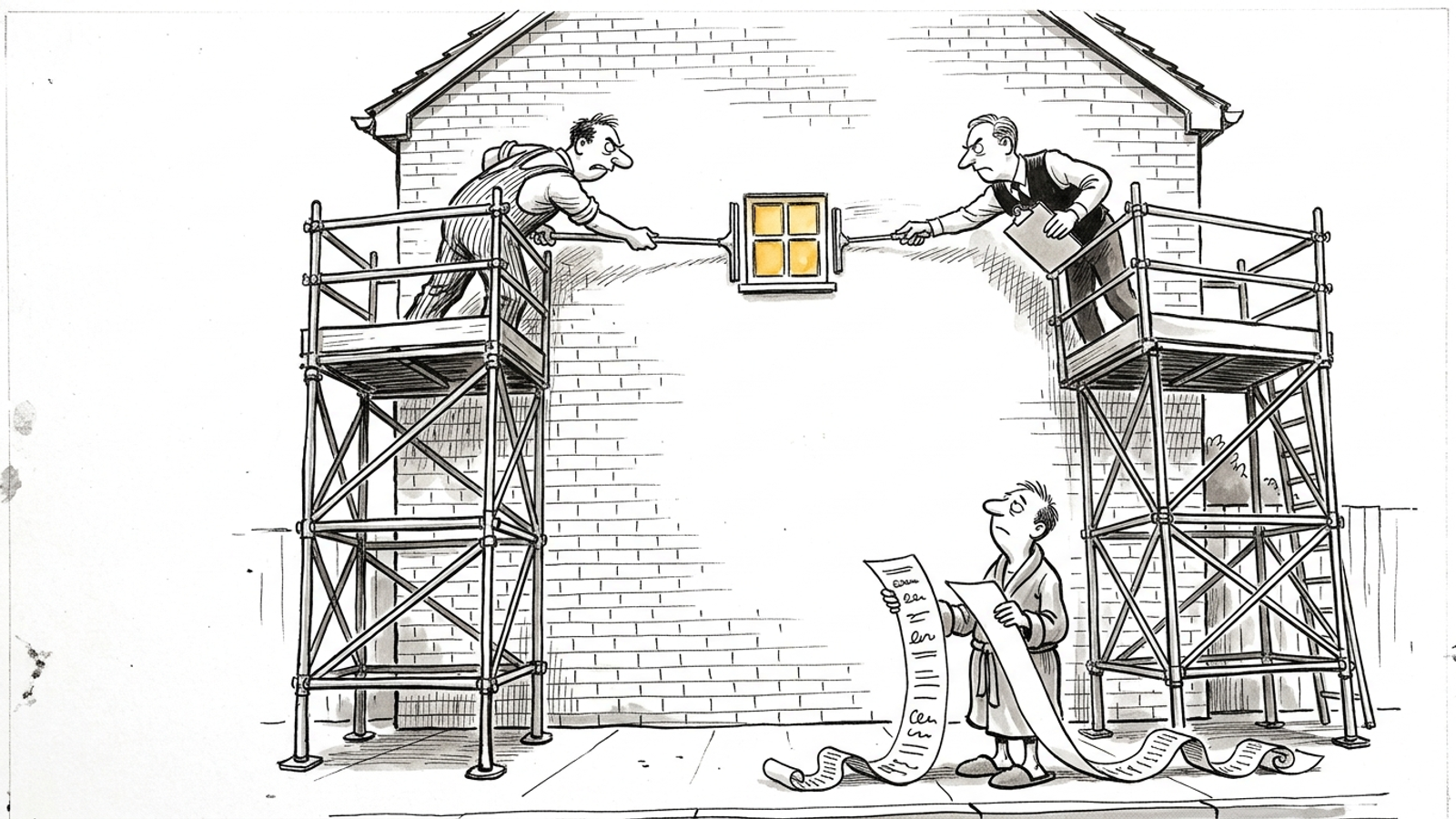
By December 31, 2027, more than half of all commercial search clicks will touch an answer box that puts sponsored units and organic AI citations in the same block of screen space. Buyers will care less about which side earned the placement than whether the answer helped them choose. Companies still paying separate PPC and SEO vendors to report on that space separately will be overpaying for the division.
I spent nearly a decade managing Google Ads campaigns by hand: mining search terms past midnight, then watching Quality Scores crater because a client changed a landing page without telling me. I used to think paid and organic search belonged in separate rooms. That worked when the page was ten blue links crowned by a few text ads. It works less well when an AI Overview synthesizes the answer, places an ad beside or inside it, and pushes the old results down the page.
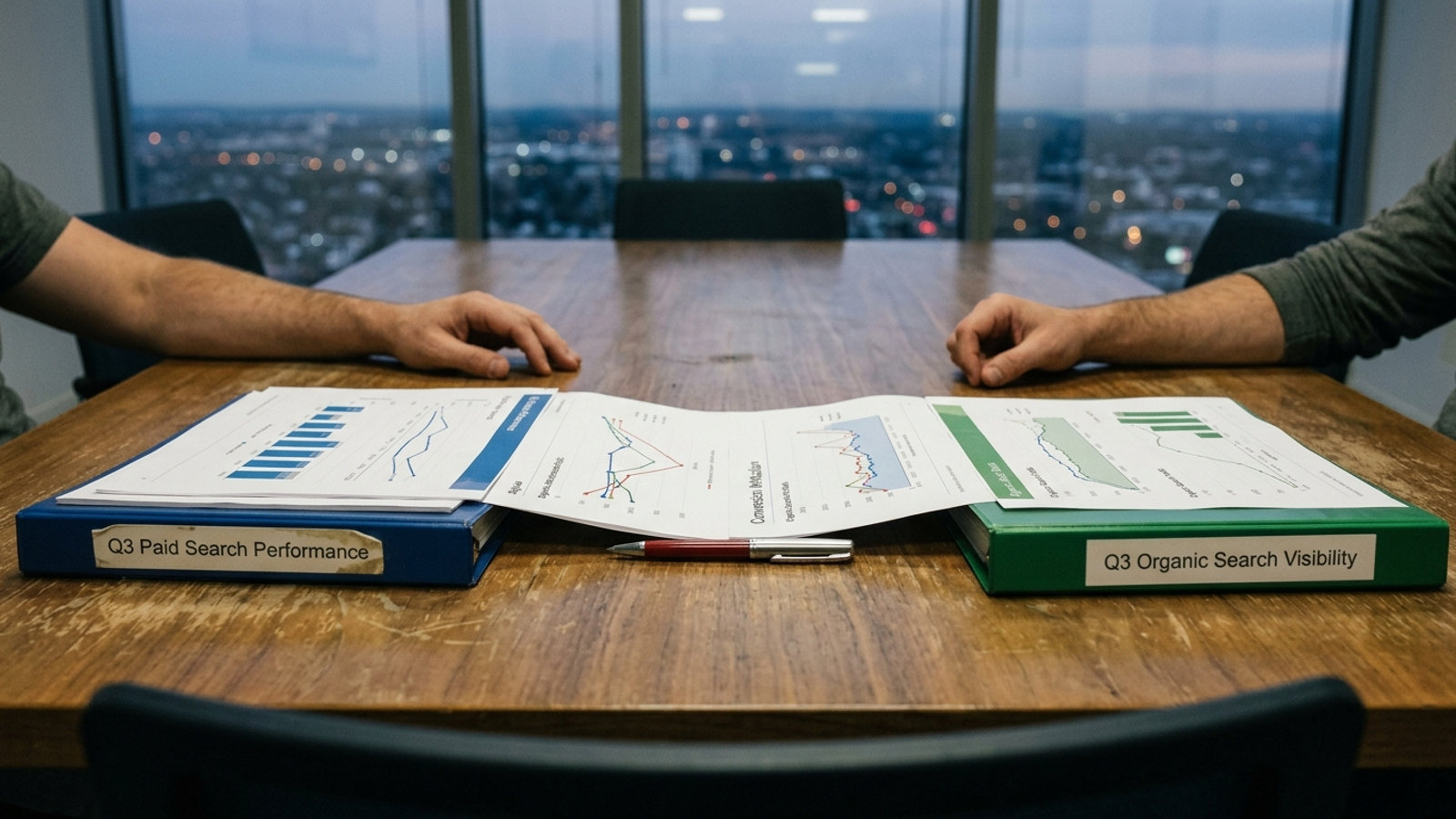
The typical vendor arrangement has not caught up. A PPC agency bills 15% of spend to manage keywords. An SEO agency charges an $8,000 monthly retainer to chase rankings. Neither sees the other’s work clearly; both can claim credit for the same revenue. That is a coordination tax, not a search strategy.
Predictions are cheap when nobody says what would prove them wrong. Here are five, each with a deadline, the mechanism I’m betting on, the evidence available in 2026, and a kill condition.
Prediction 1: Ads occupy more of the AI answer by September 2027
In late 2024, Google introduced ads in AI Overviews as an experiment. By mid-2026, Google Ads documentation described ads above, below, and within AI Overviews across 12 countries, including the United States, Canada, Australia, and Singapore. Standard Search, Shopping, and Performance Max campaigns can serve there without a separate opt-in. Google can use both the original query and the context of the generated answer to select an ad.
The pressure behind that expansion is inventory. SparkToro and Similarweb’s clickstream analysis put US Google searches ending without an open-web click at 68.01% in early 2026, more than seven percentage points higher than in 2024. If searchers stay inside the interface, ad inventory has to follow them. You can already see the shift in ads appearing in AI Overviews.
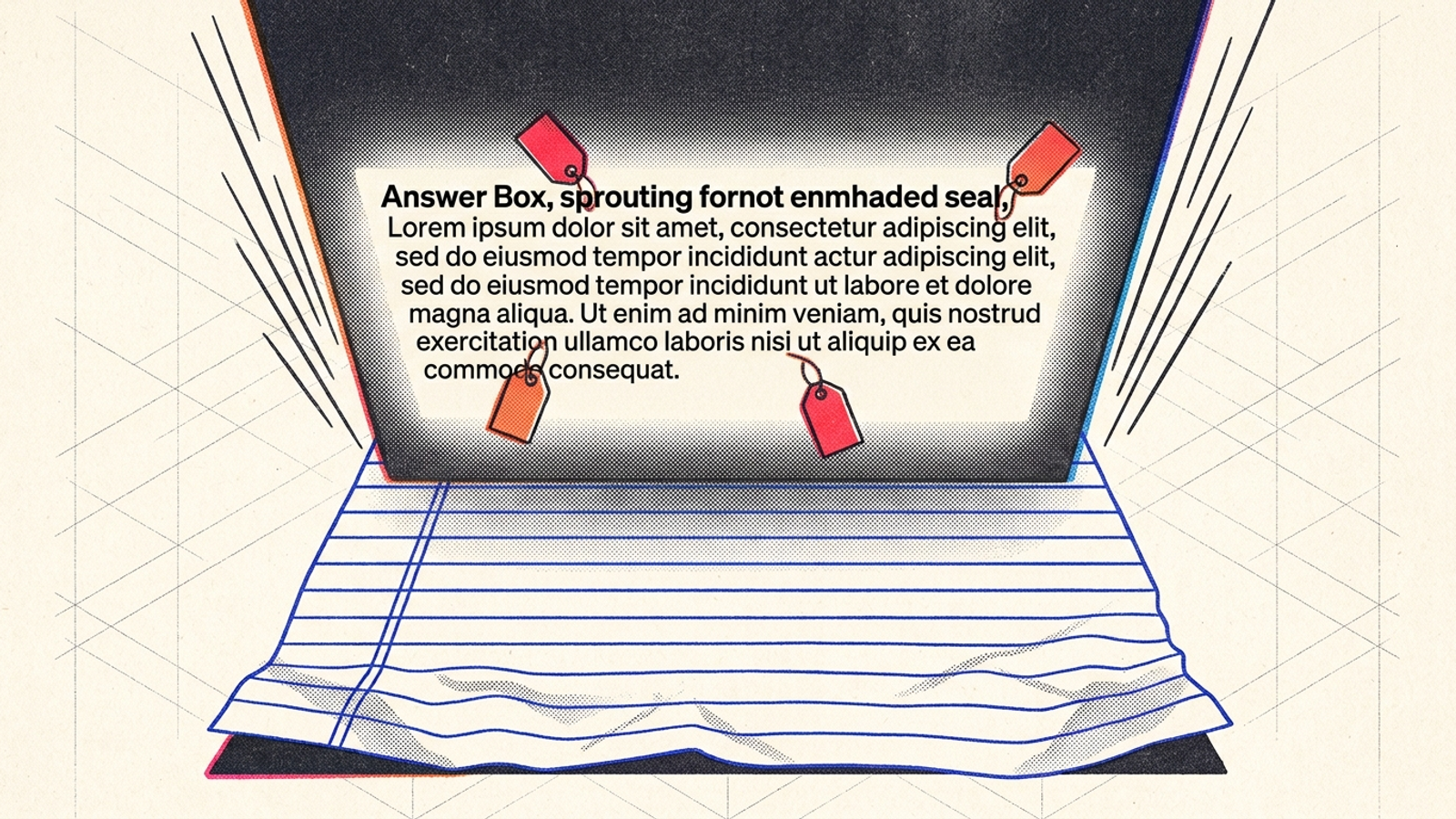
The prediction: By September 30, 2027, more than 45% of commercial desktop queries that trigger an AI Overview will show at least one embedded or directly adjacent sponsored format, up from roughly 12% in mid-2026.
What would prove me wrong: If third-party monitoring from platforms such as Semrush or BrightEdge puts that rate below 20% across tracked commercial queries through Q3 2027, or Google restores an explicit AI Overview ad opt-out while letting advertisers stay in the search auction, this prediction fails. Watch the answer box, not just the old ad positions.
Prediction 2: Transactional CPCs climb as clicks get scarcer
An Ahrefs analysis of 300,000 keywords tracking layouts into late 2025 found that an AI Overview coincided with a 58% drop in average click-through rate for the top organic result. Zero-click searches on those queries reached roughly 83%, versus roughly 60% on standard results pages. Meanwhile, WordStream’s 2026 search benchmarks put average Google Ads CPC at $5.42, up from $2.32 a decade earlier. Legal services averaged $9.87; home improvement, $8.33.
Those figures do not mean AI Overviews caused every dollar of CPC inflation. They do show the squeeze I expect to intensify. When an answer satisfies casual searchers before they click, the remaining visits become more contested. Automated bidding systems chasing conversion targets have reason to bid hard for those visits. A siloed PPC report can show the higher CPC without explaining what happened to the available clicks around it.
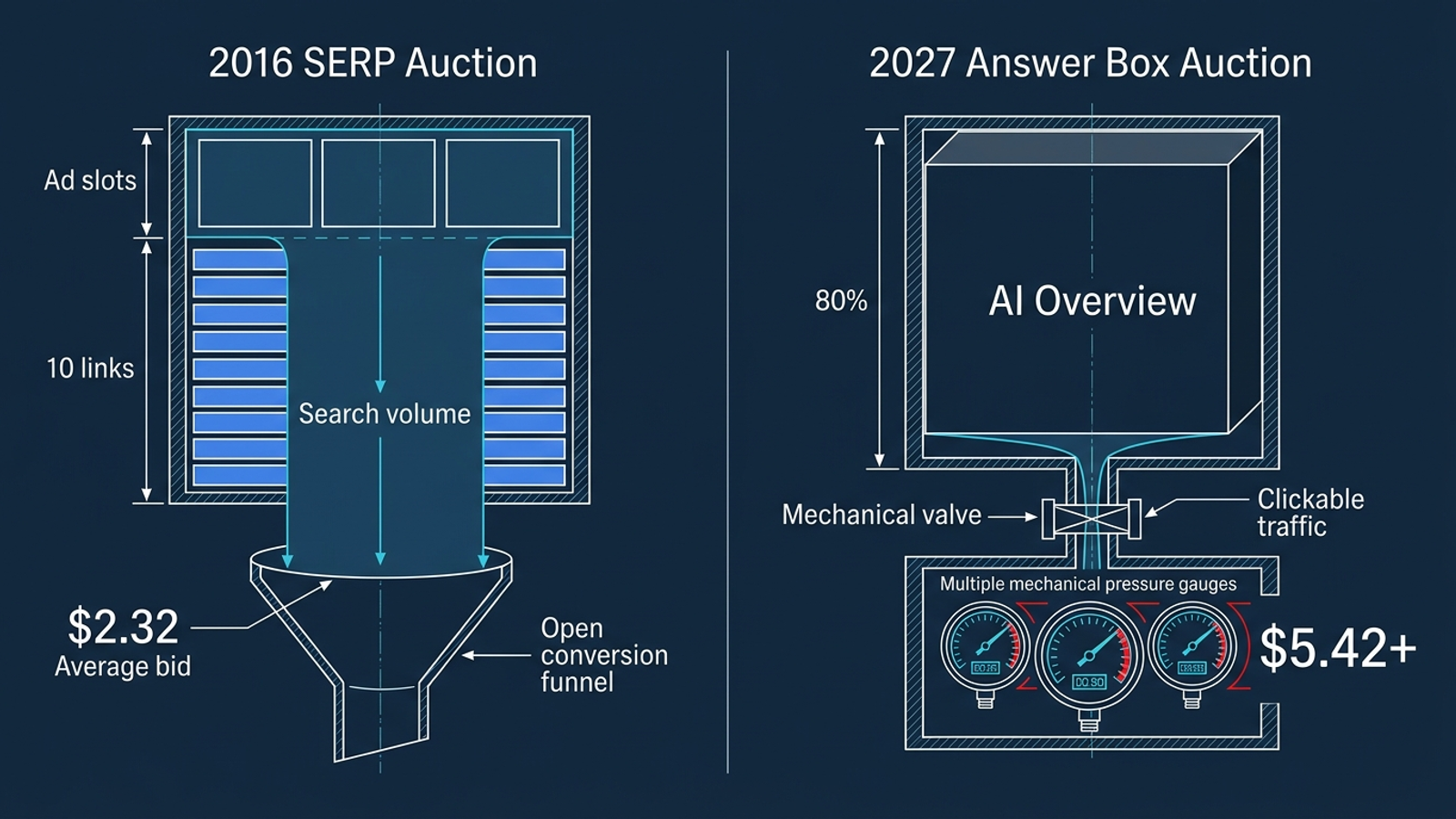
The prediction: By December 31, 2027, average search CPCs on transactional queries across North America will be 20% to 30% above 2026 baselines, while paid click volume on those terms falls by double digits.
What would prove me wrong: If independent benchmarks show commercial search CPCs flat or falling through 2027, or Google adds enough clickable ad space to ease unit pricing, the auction did not tighten as I expect. Track the price and the volume together; either number alone tells half the story.
Prediction 3: AI citations change the economics of the ad beside them
I used to hear that organic rankings lifted PPC performance and wonder how much of the claim was an SEO account manager defending a retainer. AI answers make that relationship worth testing again. A buyer can see a brand cited in an answer and its ad in the same view. Another advertiser might buy an ad beside an answer that cites two competitors instead. Those are not equivalent placements, even if a PPC dashboard files them under the same campaign.
The available evidence is about clicks, not proven conversion lift. In a 15-month study of 3,119 queries and 26 million impressions, Seer Interactive found that AI Overviews coincided with lower baseline click-through rates: organic CTR fell 61%, from 1.76% to 0.61%, and paid CTR fell 68%, from 19.7% to 6.34%. Yet brands cited inside an AI Overview received 35% more organic clicks and 91% more paid clicks than brands not cited. That association does not establish that a citation caused a sale. It does make citation status a poor thing for a paid team to ignore.
The prediction: By June 30, 2027, search programs that coordinate paid bidding with verified AI citation status will achieve at least a 30% lower blended customer acquisition cost than programs bidding blind across comparable auction sets.
What would prove me wrong: If comparisons across commercial accounts find no meaningful acquisition-cost advantage, or find that citation status corresponds to less than a 5% difference in ad conversion rates through mid-2027, I will drop the claim. Put citation status beside paid performance before you buy more of the same queries.
Prediction 4: Last-click reports miss too much of search’s first contact
The old measurement loop was tidy. Someone searched, clicked an ad or blue link, landed on a site, and eventually triggered a conversion pixel. An answer interface breaks the first step. A buyer can read a summary naming three software platforms, close the tab, and return weeks later through a bookmark or a brand search. The eventual session is visible. The first encounter is not.
The zero-click figures in prediction one are the warning, not a measurement of invisible pipeline. We cannot infer from a search ending without a click that it produced a customer. But if more search evaluation happens before the visit, a last-click report becomes a narrower account of search’s contribution. Paying one team for ads and another for organic visibility makes that blind spot easier to miss: each presents the part its dashboard can see.
The prediction: By December 31, 2027, standard last-click Google Analytics 4 sessions will miss more than 40% of first-touch interactions originating on search surfaces. Teams budgeting for search will need to consider answer inclusion and closed-won pipeline alongside referral sessions.
What would prove me wrong: If last-click referral traffic still represents more than 75% of measured search-attributed pipeline in B2B and high-consideration consumer categories through late 2027, the click model has held up better than I expect. Do not call an unseen first touch worthless merely because a session report cannot display it.
Prediction 5: Percentage-of-spend contracts lose their grip by October 2027
Percentage-of-spend pricing made more sense when account growth brought a lot more manual work: adjusting bids, sorting search terms, and copying formulas across spreadsheets. I know that work; I did it. Smart bidding now handles real-time bids, and autonomous software can keep auditing search queries and shopping feeds between human reviews. More spend no longer makes more billable hours a persuasive argument by itself.
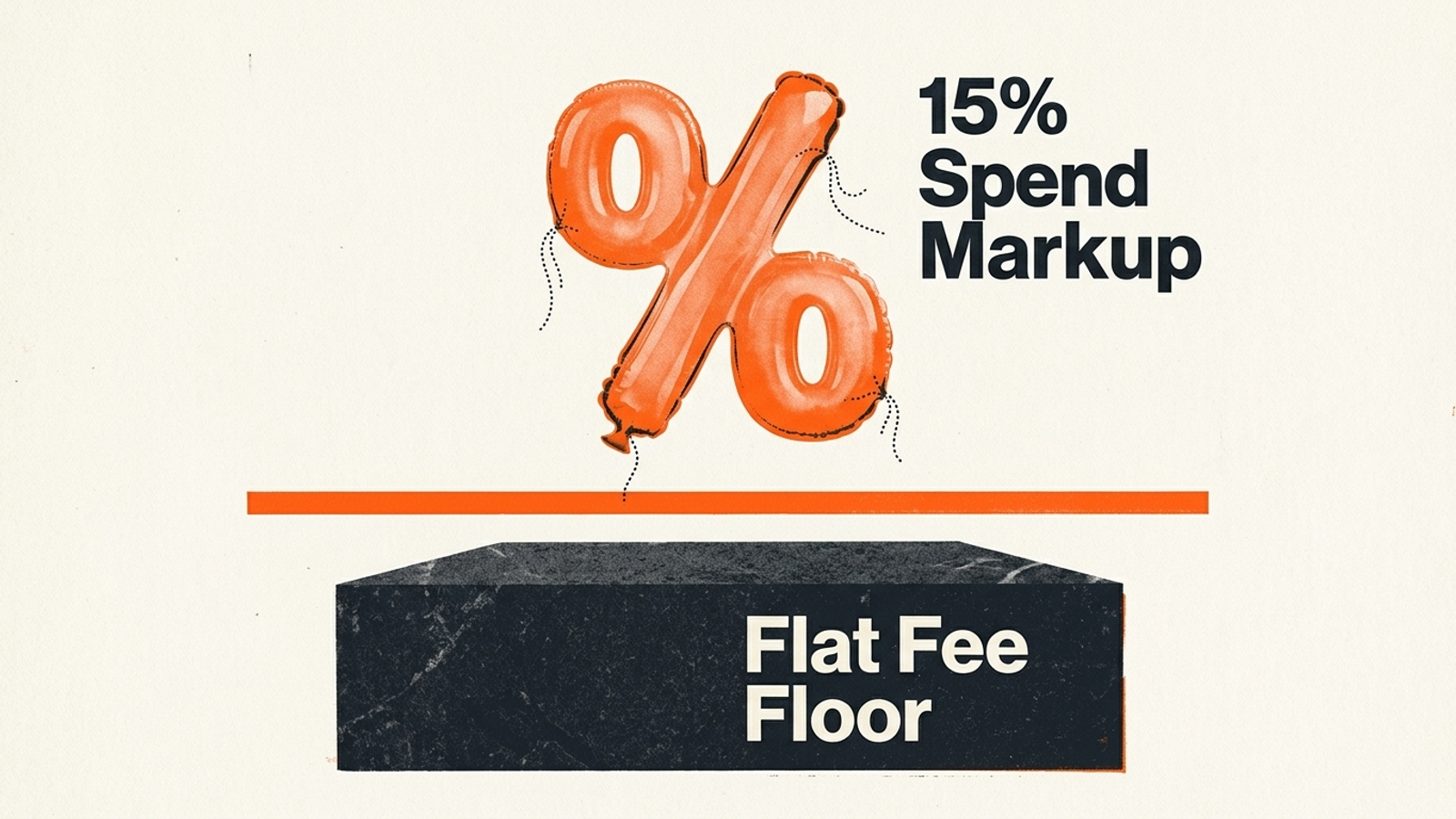
The conflict is straightforward. Under a percentage contract, the agency’s fee rises when the client’s media spend rises, whether or not that extra spend improves efficiency. I laid out the problem in why percentage-of-spend pricing fails Google Ads agencies and clients. A Forrester Consulting and Dentsu Creative survey of 356 marketing and procurement executives offers a current signal: 25% of North American agencies had moved away from percentage-of-spend and hourly billing in favor of fixed fees, and 63% reported high satisfaction.
The prediction: By October 31, 2027, fewer than 30% of mid-market advertisers spending $20,000 to $250,000 a month will use percentage-of-spend agency contracts. Flat monthly execution fees tied to written performance targets will take their place.
What would prove me wrong: If agency pricing benchmarks show percentage-of-spend contracts retaining more than 50% share across mid-market search retainers by late 2027, the old fee structure has held its ground. Ask what work the fee buys, not how large a budget it follows.
What would make the whole bet fail
There is a coherent way for several predictions to fail together. Buyers could turn away from generated summaries after unreliable answers. Regulatory intervention could separate AI synthesis from commercial ad slots. Search platforms could limit AI Overviews if the computing costs remain too high. In any of those cases, the familiar results page and the vendors built around it get more time.
I am not attached to AI as an ideology. I am following where the answers, ads, and auction pressure appear to be moving. If AI Overview ad penetration stalls, commercial CPCs flatten, and citation status adds nothing measurable to acquisition, keep the separate operating model. But do not treat a pair of clean vendor reports as proof that the division works. The test is business performance across the whole search journey.
What to do in the next 90 days
If I am right, waiting for separate PPC and SEO reports to agree will cost you time and money. You do not need to accept all five forecasts to test the operating model. Start with the overlap you can see:
- Audit paid placements and AI citations together. For high-intent commercial terms, note where you buy ads, where your brand appears in generated answers, and where competitors appear instead. Put those observations beside acquisition cost and qualified pipeline.
- Write down one baseline and one business target. Use qualified pipeline or closed-won revenue, not two vendors’ competing claims about clicks and rankings.
- Review the fee structure. If an agency earns more whenever you spend more, ask how its contract rewards media efficiency. Move toward a fixed monthly fee with a written performance target where that structure fits.
- Give one owner the whole search picture. That owner should connect bidding, negative-query work, landing-page intent, and answer-engine visibility rather than reconciling two presentations after the budget is spent.
That is the operating case for groas’s 90-day paid ads and AI search sprints: one strategist, a transparent baseline, and a flat fee instead of two retainers reporting on opposite sides of the same answer box. Establish the baseline now. By the end of 2027, you should know whether one accountable search operation beat the two-vendor arrangement—not which team made the better slide deck.